
Black Tea vs Green Tea: What Is the Real Difference? (2026 Guide)
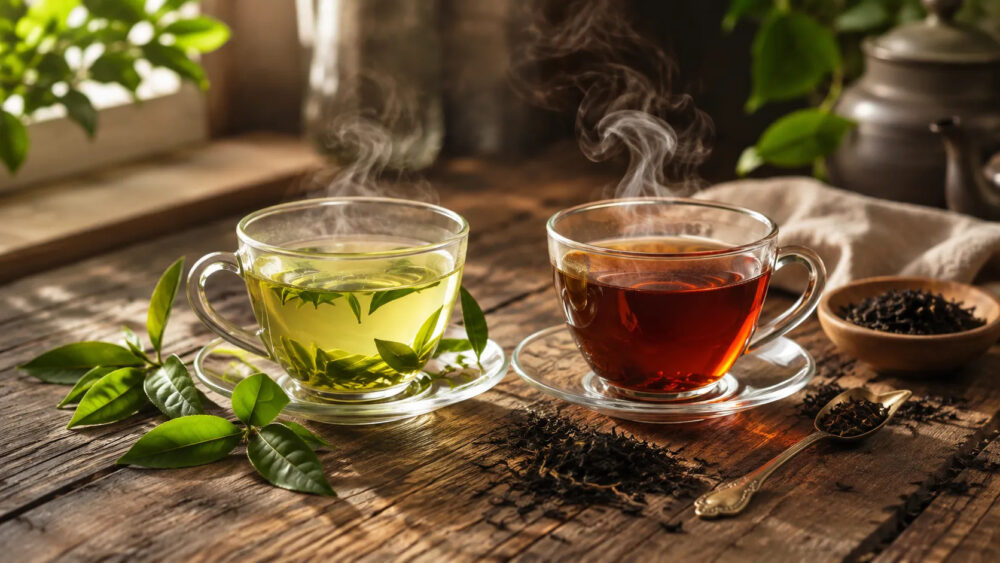
There is a good chance your morning starts with a warm cup in your hands. Maybe it’s a strong, malty black tea that wakes you up like an old friend. Or maybe it’s a light, grassy green tea that feels like a gentle nudge rather than a jolt. Either way, if you are reading this, you are probably someone who loves tea — not just drinks it, but actually loves it. And that puts you in very good company. Tea is the second most consumed drink in the world after water, enjoyed by people from busy streets in Mumbai to quiet tea houses in Kyoto, from British kitchens to Turkish living rooms.
But here is a question that comes up again and again, in tea shops, in kitchens, and in online forums full of fellow tea lovers: what is the real difference between black tea and green tea? Are they really from different plants? Does one have more caffeine? Is one healthier? Does the “right” choice depend on the time of day, or your health goals, or just your mood?
This blog is written for you — the everyday tea lover who wants real, simple, honest answers. No confusing science terms, no long-winded lectures. Just clear, friendly information you can use the next time you are standing in front of a tea shelf, wondering which box to pick up.
Let’s settle this once and for all.
They Both Come From the Same Plant
Here is the fact that surprises almost everyone the first time they hear it: black tea and green tea come from the exact same plant. It is called Camellia sinensis, a evergreen shrub that has been grown for thousands of years, mostly across Asia.
That’s right — the tea bush growing on a hillside in Assam and the tea bush growing on a terraced slope in China’s Fujian province are, botanically speaking, cousins of the very same species. So if the plant is the same, why do black tea and green tea look, taste, and smell so completely different?
The answer has nothing to do with different seeds or different soil. It comes down to one simple thing: how the leaves are treated after they are picked.
The Real Difference Is in the Processing
Think of tea leaves a bit like fruit. A fresh apple slice left out on your kitchen counter will slowly turn brown. That happens because of a natural process called oxidation, where the flesh of the fruit reacts with oxygen in the air. Tea leaves behave in a similar way.
Green tea is picked and then very quickly heated, either by steaming (common in Japan) or pan-firing (common in China). This heating step happens almost immediately after harvest. It stops the natural oxidation process in its tracks. Because the leaves barely have time to change, they stay close to their natural green colour, and they keep a lot of their fresh, grassy, sometimes slightly sweet character.
Black tea, on the other hand, is allowed to fully oxidize before it is dried. After picking, the leaves are rolled or crushed to release their natural juices and enzymes. Then they are left to rest and interact with oxygen for a period of time, much like that apple slice turning brown. This oxidation is what turns the leaves from green to a deep brown or almost black colour, and it’s also what creates that rich, bold, sometimes malty or fruity flavour that black tea is known for.
So, in short:
- Green tea = minimal oxidation, leaves stay close to their natural state
- Black tea = full oxidation, leaves transform completely
This one processing choice is the starting point for almost every difference you will notice between the two — the colour in your cup, the taste on your tongue, the aroma that rises up when you take that first sip, and even some of the health effects.
Taste and Aroma: Two Very Different Experiences
If you closed your eyes and were handed a cup of each, you would know instantly which was which.
Green tea tends to taste light, fresh, and a little vegetal — think of flavours like steamed spinach, fresh grass, or lightly toasted nuts. Some green teas, like Japanese sencha, have a slightly sweet, almost seaweed-like taste, while others, like Chinese longjing (dragon well), lean more toward a soft, chestnut-like flavour. The overall experience is gentle and refreshing, almost like drinking something that still feels alive.
Black tea is the opposite kind of pleasure. It’s bold, rich, and full-bodied. Depending on where it’s grown, black tea can taste malty and brisk (like Assam from India), bright and slightly citrusy (like Ceylon from Sri Lanka), or smooth with delicate floral notes (like Darjeeling, sometimes called the “champagne of teas”). This is the tea that stands up well to milk and sugar, the tea that forms the base of your everyday chai, and the tea that many people reach for first thing in the morning because its flavour feels satisfying and grounding.
Neither taste is “better” than the other — they are simply built for different moments and different moods. Some tea lovers keep both in their kitchen and choose depending on the time of day, the weather, or simply what they feel like sipping.
Colour in the Cup
This one is simple but worth mentioning, because it’s often the first thing people notice.
Green tea, when brewed properly, produces a light yellow-green or pale golden liquid. It looks delicate, almost like it’s glowing.
Black tea produces a much darker liquid — anywhere from deep amber to a rich reddish-brown, depending on the variety and how long it’s steeped. This is part of why black tea looks so comforting in a cup, especially on a cold morning.
Caffeine: Setting the Record Straight
This is probably the most talked-about difference between the two teas, and there’s a lot of confusion around it. Many people assume green tea has little to no caffeine because it’s marketed as the “light and healthy” option. In reality, the caffeine difference between black and green tea is much smaller than most people think.
On average, a cup of black tea contains somewhere around 40 to 70 milligrams of caffeine, while a cup of green tea contains around 20 to 45 milligrams. So yes, black tea generally has more caffeine — but green tea is far from caffeine-free.
What actually affects caffeine content more than the tea type is:
- How long you steep it — a longer steep pulls out more caffeine
- Water temperature — hotter water extracts caffeine faster
- The part of the plant used — teas made from young buds and tips (like some white and green teas) can actually be higher in caffeine than teas made from mature leaves
- Loose leaf vs tea bags — loose leaf tea often gives a different caffeine release than finely ground tea bag tea
So if you’re someone who’s sensitive to caffeine, don’t assume switching from black to green tea will automatically solve the problem. It might help a little, but the brewing method matters just as much as the tea itself.
Health Benefits: What Science Actually Says
Tea lovers everywhere have heard the claims — tea is good for your heart, good for your skin, good for your focus, good for your digestion. And there is real truth behind many of these claims, though it’s worth understanding where the benefits come from and how black and green tea differ.
Both black and green tea are rich in natural plant compounds called polyphenols, which act as antioxidants in the body. Antioxidants help protect your cells from a type of damage caused by unstable molecules known as free radicals. This is a big part of why tea, in general, has been linked to a lower risk of several health issues over the years.
The specific type of antioxidant differs between the two teas because of that same oxidation process we talked about earlier.
Green tea is especially rich in a group of antioxidants called catechins, and one in particular — EGCG (epigallocatechin gallate) — has been studied quite a bit for its potential role in supporting heart health, metabolism, and healthy inflammation levels. Because green tea leaves are barely oxidized, these catechins stay largely intact.
Black tea, because of its full oxidation process, transforms many of those catechins into different compounds called theaflavins and thearubigins. These give black tea its dark colour and are also linked to their own set of health benefits, including support for cholesterol levels and heart health.
So it’s not really accurate to say one tea is “healthier” than the other. It’s more accurate to say they offer different kinds of benefits, thanks to different types of antioxidants. Many tea lovers choose to enjoy both throughout the week, simply to get a wider variety of these natural plant compounds.
A few other general points worth knowing:
- Both teas may support a calmer, more focused kind of alertness, thanks to a natural amino acid called L-theanine, which works alongside caffeine to create a smoother energy boost — without the jittery crash that coffee sometimes brings.
- Both teas are naturally calorie-free when enjoyed without milk or sugar, making them a comforting choice for people watching their sugar intake.
- Both have been part of traditional wellness practices for centuries, long before modern science started studying them in labs.
As always, it’s worth remembering that tea is not a magic cure for anything. It works best as part of an overall healthy lifestyle, alongside good food, movement, sleep, and water. If you have specific health conditions or are on medication, it’s always smart to check with your doctor before making major changes to your diet.
How to Brew Each One Properly
Here is something many tea lovers don’t realise: a huge amount of what people think is a “difference between black and green tea” is actually just a difference in brewing mistakes. Green tea, in particular, is very easy to over-brew, and this is what leads to that bitter, unpleasant taste that turns some people off green tea for good.
Brewing green tea the right way:
- Use water that is hot, but not boiling — around 70 to 80 degrees Celsius is ideal. Boiling water scorches the delicate leaves and pulls out too much bitterness.
- Steep for a short time — usually just 1 to 3 minutes, depending on the variety.
- Use slightly less leaf than you think you need. Green tea is delicate, and less is often more.
Brewing black tea the right way:
- Use water that is fully boiling, close to 95 to 100 degrees Celsius. Black tea leaves are sturdier and need that heat to release their full flavour.
- Steep for a longer time — typically 3 to 5 minutes.
- Feel free to add milk, honey, or a slice of lemon, depending on your taste and tradition. Black tea handles these additions beautifully.
If you’ve ever had a green tea that tasted bitter and harsh, there’s a good chance it wasn’t the tea’s fault at all — it was likely brewed with water that was too hot, or steeped for too long. Give it another try with cooler water and a shorter steep, and you might be pleasantly surprised.
Which One Should You Choose?
Here’s the honest answer: there isn’t one “correct” tea. The right choice really depends on you — your taste preferences, your caffeine tolerance, the time of day, and even your mood.
You might lean toward black tea if:
- You enjoy a bold, rich flavour that stands up well to milk and sweeteners
- You want a stronger caffeine boost to start your day
- You love traditions like English breakfast tea, chai, or afternoon tea
- You prefer a comforting, warming cup, especially in cooler weather
You might lean toward green tea if:
- You enjoy lighter, more delicate, fresh flavours
- You want a gentler caffeine lift, perhaps in the afternoon
- You’re drawn to the traditions of Japanese or Chinese tea ceremonies
- You want a refreshing drink that feels light, even in warm weather
Many tea lovers don’t choose just one — they build a little rotation. Black tea in the morning for that steady, comforting start to the day. Green tea in the afternoon for a lighter, refreshing pick-me-up. There’s no rule that says you have to pick a side. Tea, after all, is meant to be enjoyed, not stressed over.
A Quick Side-by-Side Look
To make things even simpler, here’s a quick summary you can keep in mind:
| Feature | Black Tea | Green Tea |
|---|---|---|
| Oxidation level | Fully oxidized | Minimally oxidized |
| Colour of leaves | Dark brown to black | Green |
| Colour in the cup | Amber to reddish-brown | Pale yellow-green |
| Flavour | Bold, rich, malty | Light, fresh, grassy |
| Caffeine (average) | Higher (40–70 mg per cup) | Lower (20–45 mg per cup) |
| Key antioxidants | Theaflavins, thearubigins | Catechins (like EGCG) |
| Best brewing water temp | Near boiling (95–100°C) | Cooler (70–80°C) |
| Popular varieties | Assam, Darjeeling, Ceylon | Sencha, Longjing, Matcha |
| Pairs well with | Milk, honey, spices | Light snacks, fresh fruit |
A Word for Tea Lovers Everywhere
No matter where you are in the world — sipping chai on a busy street corner, enjoying a quiet cup of sencha at sunrise, or gathering around a pot of Darjeeling with family on a rainy afternoon — tea has a special way of connecting people. It slows us down. It gives us a moment to breathe. It turns an ordinary five minutes into something a little more meaningful.
Black tea and green tea may come from the same humble plant, but each has grown into its own unique tradition, culture, and flavour story. There’s really no need to pick a “winner.” Instead, think of them as two different chapters of the same beautiful book — one bold and warm, the other light and fresh, both worth reading again and again.
So the next time someone asks you, “Black tea or green tea?” — you’ll not only know the answer, you’ll understand the story behind it. And maybe, just maybe, you’ll decide the best answer is simply: both, please.
Find your next cup.
Need help choosing your tea? Tell us what you enjoy, and our team will help you find your next cup.