
Herbal Tea vs Tea: Camomile, Peppermint, Rooibos & Hibiscus
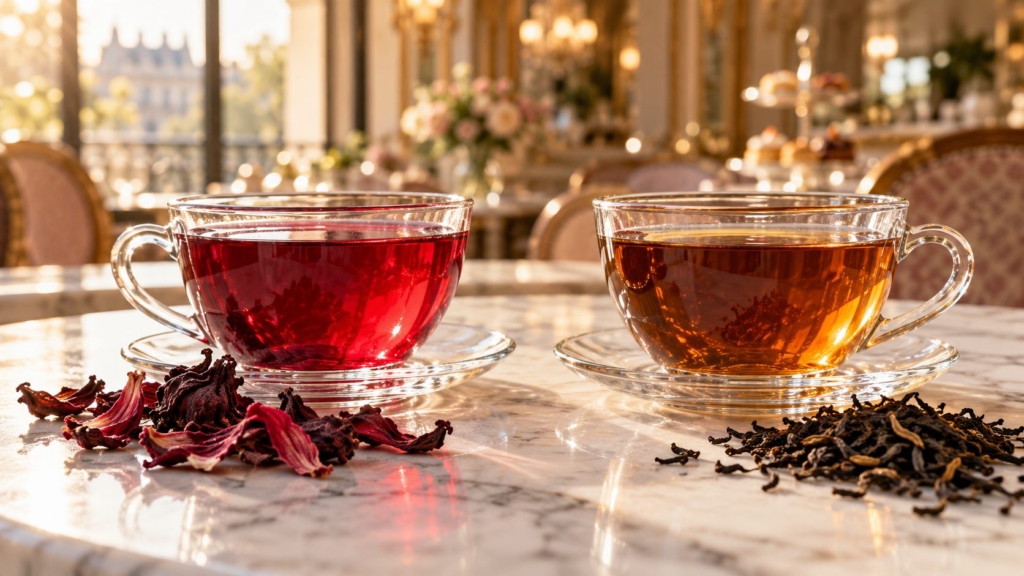
Ask for “a tea” after dinner in Paris and you might be handed something that has never been near a tea bush. A cup of camomile. A sprig of mint. The French have a better word for it, tisane, and it quietly settles a question many tea lovers never think to ask: is herbal tea actually tea?
Strictly speaking, no. But that doesn’t make it any less worth drinking. Here’s what separates the two, and how four of the most loved herbal cups (camomile, peppermint, rooibos and hibiscus) each earn a place in your day.
What makes a tea a “true” tea?
Every true tea comes from one plant: Camellia sinensis. Black, green, white and oolong are all leaves from that same bush, just processed differently. Your Earl Grey, your Darjeeling and your morning Ceylon all share the same family tree.
Herbal tea is something else entirely. It’s an infusion of flowers, leaves, roots, bark or fruit from almost any plant except the tea bush. That single difference changes three things you’ll notice in the cup:
- Caffeine. True tea contains it naturally; a cup of black tea typically carries around 40 to 50 mg. The four herbals in this guide contain none.
- Tannins. True tea has that brisk, slightly drying finish. Most herbal infusions are softer, with rooibos famously low in tannins.
- Flavour range. True tea tastes like tea, then picks up whatever it’s blended with. Herbal infusions taste of the plant itself: floral, minty, nutty or sharp and fruity.
| True tea | Herbal tea (tisane) | |
|---|---|---|
| Plant | Camellia sinensis | Flowers, leaves, roots, fruit of other plants |
| Caffeine | Yes | None in camomile, peppermint, rooibos or hibiscus |
| Mouthfeel | Brisk, tannic | Mostly soft and rounded |
| Best moment | Morning and afternoon | Evening, after meals, any time you want to skip caffeine |
Neither is “better”. They simply do different jobs. Now for the four herbals.
Camomile: the gentle evening cup
Camomile is made from small, daisy-like flowers, and it tastes exactly as calming as it looks: soft, honeyed and a little like warm apples. It’s the cup people reach for when the day is done.
Its sleepy reputation is centuries old. The science is more modest: the US National Center for Complementary and Integrative Health notes there’s very little evidence on camomile and insomnia. Still, a warm, caffeine-free ritual before bed does no harm, and plenty of people swear by it.
Good to know: if you’re allergic to ragweed, chrysanthemums or daisies, you may react to camomile too, so go carefully.
Peppermint: the after-dinner reset
Peppermint tea is bright, cool and clean, with menthol that seems to clear your head on the first sip. It’s the classic finish to a heavy meal, and it’s just as good iced on a warm afternoon.
Peppermint has a long history as a digestive herb, and most of the research focuses on concentrated peppermint oil rather than the tea in your cup. One honest caveat: peppermint oil can bring on heartburn in some people, so if you’re prone to reflux, see how your body responds.
Rooibos: the herbal that drinks like tea
If you love black tea but want to cut down on caffeine, rooibos is your bridge. It comes from Aspalathus linearis, a shrub that grows in the Cederberg mountains of South Africa, and brews a warm, reddish-amber cup that looks surprisingly like black tea.
The flavour is naturally sweet, nutty and a touch woody. Because it’s caffeine-free and low in tannins, it never turns bitter, even if you forget it in the pot. It’s also the most flexible of the four: lovely black, lovely with a splash of milk, and a natural partner for vanilla or orange.
Hibiscus: tart, ruby-red and surprisingly serious
Hibiscus is the showstopper. The dried petals steep into a deep crimson cup with a sharp, cranberry-like tang. Hot, it’s bracing; iced, it’s one of the most refreshing drinks you can make.
It also has some of the better research behind it. In a 2010 Tufts University trial, adults with slightly raised blood pressure who drank three cups of hibiscus tea a day for six weeks saw their systolic reading fall by about 7 points, against roughly 1 point for a placebo drink. That’s encouraging, but it’s a single small study, not a treatment.
Good to know: because hibiscus may lower blood pressure, anyone taking blood-pressure medication should mention a daily hibiscus habit to their doctor.
The four herbal teas side by side
| Herbal tea | Tastes like | Colour | Best moment | Worth knowing |
|---|---|---|---|---|
| Camomile | Soft, honeyed, floral | Pale gold | Before bed | Avoid if allergic to daisies or ragweed |
| Peppermint | Cool, clean, minty | Light green-gold | After a meal | Can aggravate heartburn in some people |
| Rooibos | Sweet, nutty, woody | Red-amber | Any time, with or without milk | Low in tannins, never bitter |
| Hibiscus | Tart, fruity, cranberry-like | Deep crimson | Afternoon, or iced in summer | Talk to your doctor if on BP medication |
How to choose: tea or tisane?
You don’t have to pick a side. Most tea lovers drink both, depending on the hour:
- Morning: a true tea. A brisk black tea or an Earl Grey gives you gentle caffeine and a proper start.
- Mid-afternoon: hibiscus, hot or iced, when you want flavour without a second caffeine hit.
- After dinner: peppermint, the classic French tisane moment.
- Before bed: camomile, or rooibos if you’d like something rounder that still feels like “real” tea.
If you’re pregnant, breastfeeding or taking regular medication, check with your doctor before making any herbal tea a daily habit. Herbal doesn’t automatically mean harmless for everyone.
Try them in JANAT’s Garden Series
JANAT’s Garden Series brings all four together in a caffeine-free collection, each in a box of 25 tea bags:
- Peppermint: cool, refreshing mint that spreads across the palate.
- Camomile: naturally sweet camomile flowers for a soothing evening cup.
- Rosehip & Hibiscus: hibiscus’s bright sourness, rounded out with rosehip.
- Rooibos & Orange: mildly sweet rooibos with juicy orange.
- Rooibos & Vanilla: rooibos with a delicate scent of Madagascar vanilla.
And when the morning calls for a true tea, the Black Series is waiting: Premium Darjeeling, Original Earl Grey and Ceylon Extra among them. One tea house, both kinds of cup.
This article is for general information and isn’t medical advice. If you have a health condition, speak to a qualified professional.
FAQ
Is herbal tea actually tea?
Not strictly. True tea comes only from the Camellia sinensis plant. Herbal tea, or tisane, is an infusion of flowers, leaves, roots or fruit from other plants, such as camomile, peppermint, rooibos and hibiscus.
Do camomile, peppermint, rooibos and hibiscus contain caffeine?
No. All four are naturally caffeine-free, which makes them a good choice for the evening or for anyone cutting down on caffeine.
Which herbal tea is best before bed?
Camomile is the classic bedtime cup thanks to its soft, honeyed flavour. Rooibos is another good option if you prefer something rounder that tastes closer to black tea.
Can you add milk to herbal tea?
Rooibos takes milk well and works especially nicely with vanilla. Camomile, peppermint and hibiscus are usually enjoyed without milk; hibiscus in particular is too tart for it.
Is it safe to drink hibiscus tea every day?
For most healthy adults, a few cups a day is a normal part of the diet. Because hibiscus may lower blood pressure, people taking blood-pressure medication, or who are pregnant, should check with their doctor first.
Does JANAT make herbal teas?
Yes. JANAT’s Garden Series includes Peppermint, Camomile, Rosehip & Hibiscus, Rooibos & Orange and Rooibos & Vanilla, each in a box of 25 tea bags.
Find your next cup.
Need help choosing your tea? Tell us what you enjoy, and our team will help you find your next cup.