
JANAT Earl Grey Comparison: Original vs Marseille vs French Oak (2026 Guide)
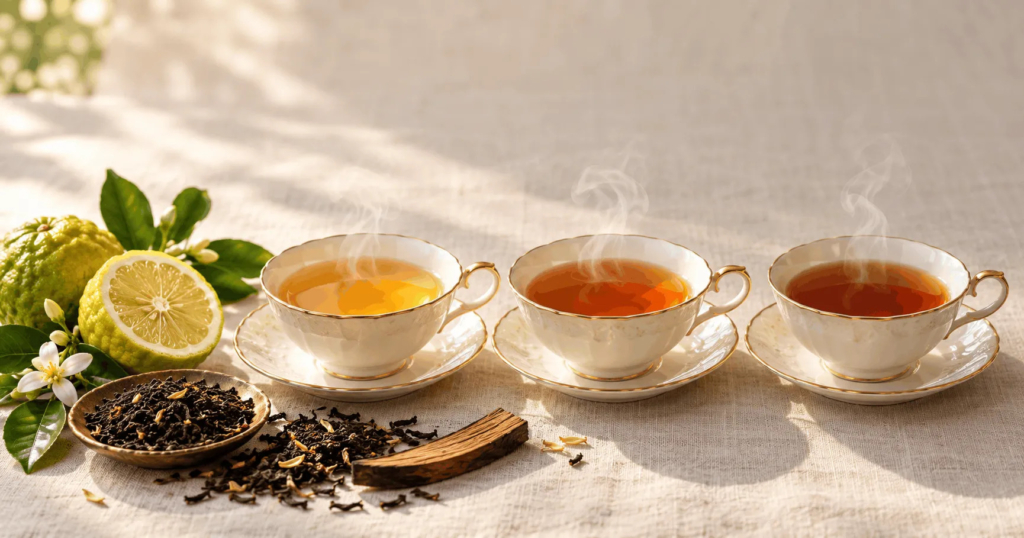
Quick answer: JANAT sells three Earl Greys. Original Earl Grey (Black Series) follows a bergamot recipe unchanged since 1923 and suits everyday drinking. Marseille Earl Grey (Gold Series) is made with fresh bergamot shipped from Naples and Sicily to Marseille, and suits bergamot lovers. French Oak Earl Grey (French Oak Series) uses Dimbulah tea aged in oak barrels, and suits people who want something they can’t get from a regular tea house. If you only buy one, start with the Original. For a gift, the Marseille or French Oak is the stronger pick.
Why This Comparison Matters
Earl Grey is probably the most recognisable flavoured tea in the world. You can order it in a Tokyo tea salon, a Dubai hotel lobby, a Mumbai café or a Paris tearoom, and in each place it means something slightly different. Some cups are soft and floral. Others taste like furniture polish. That range is exactly why choosing one gets tricky.
JANAT makes it trickier, in a good way. Most tea houses stock a single Earl Grey. JANAT, a French tea house founded in 1872, sells three, each in a different series with a different promise. Standing in front of three tins that all say “Earl Grey,” you’re entitled to ask what sets them apart.
This guide answers that honestly. We’ll look at what the three share, where they differ, and who each one suits. You’ll also find a side-by-side tasting method, because no article can replace your own palate. By the end, you should be able to choose with confidence.
First, What Is Earl Grey, Really?
Earl Grey is black tea scented with bergamot, a citrus fruit grown mainly in southern Italy. The scent comes from oil pressed from the fruit’s peel. It’s tart and floral, somewhere between lemon and orange blossom, with a slightly bitter edge.
People often forget the other half of the cup. A bergamot-scented tea is only as good as the leaf underneath. A thin, dusty base makes the bergamot taste like perfume sitting on top of nothing. A good base gives the citrus something to rest on, and the whole cup feels rounded.
So when we compare these three teas, we’re really asking three questions:
- What is the story behind the bergamot?
- What is different about the tea or its production?
- What kind of drinker will enjoy it most?
The Three Earl Greys at a Glance
| Feature | Original Earl Grey | Marseille Earl Grey | French Oak Earl Grey |
|---|---|---|---|
| JANAT series | Black Series | Gold Series | French Oak Series |
| Defining claim | Selected bergamot oil, same recipe since 1923 | Fresh bergamot conveyed from Naples and Sicily to the port of Marseille | Dimbulah tea aged in oak barrels, JANAT’s signature Earl Grey flavour |
| Bergamot character | Classic, recipe-driven | Fresh, fruit-led | Classic recipe plus barrel influence |
| Production difference | Standard JANAT blending | Emphasis on fresh fruit sourcing | Extra oak-barrel ageing step |
| Pack formats | 125g tin or 25-bag box | 100g tin | Check the French Oak Series page |
| Milk friendly? | Yes, works well | Yes, JANAT says with or without | Better plain first, then try milk |
| Best moment | Daily cup | Afternoon pot, gifting | Quiet, attentive drinking, gifting |
| Ideal drinker | Everyday tea lover | Bergamot enthusiast | Curious, craft-minded drinker |
Format and sourcing details come from JANAT’s product pages as of October 2026. Pack sizes and availability can change, so check the live pages before ordering.
Original Earl Grey: The Benchmark Cup
The Original is the one JANAT describes as an authentic tea scented with selected bergamot oil, following the same recipe since 1923. A recipe doesn’t survive a century unless people keep wanting the result. This is the reference point for the other two, and it’s a sensible place to begin.
In the cup, you can expect what you’d hope for from a classic: a clear citrus top note over a steady black tea body. It doesn’t try to surprise you, and that’s its strength. It’s the Earl Grey you can make at 7 a.m. without thinking, and the one that still tastes right at 4 p.m. with a biscuit.
Pros
- A dependable, familiar profile with a long heritage behind it
- Available as a 125g tin or a 25-bag box, so it fits households, offices and travel
- Works well plain or with a splash of milk
- The easiest of the three to use as a daily tea
Cons
- Less distinctive than the other two if you want a talking point
- The “selected bergamot oil” story is less visual than fresh fruit or oak barrels, so it can feel plainer on the shelf
Brewing tip: About 3 minutes works well for scented black tea. Past 4 minutes, bergamot teas can turn bitter.
Marseille Earl Grey: The Bergamot Lover’s Pick
Marseille Earl Grey tells a different story. JANAT says it’s made with fresh bergamot conveyed from Naples and Sicily to the port of Marseille. Whatever the exact process, the message is clear: this is the version where the fruit takes centre stage and its journey is part of the product.
It sits in the Gold Series and comes in a 100g tin. Even so, JANAT says it can be enjoyed with or without milk at any time of day, which makes it more versatile than a “special occasion” label suggests.
If you already drink Earl Grey and find yourself wishing the citrus were a bit more present, this is the one to try next.
Pros
- A sourcing story built around fresh bergamot from Naples and Sicily
- Flexible: enjoyable with or without milk, at any time of day
- A strong gift for someone who “already has an Earl Grey”
- Part of the Gold Series, which gives it a refined look on the shelf
Cons
- Only offered as a 100g tin, so there’s no tea-bag option for the office
- If you prefer a very quiet bergamot note, a fruit-led profile may be more than you want
Brewing tip: Try your first cup plain to find the citrus, then pour a second with milk to see how it changes.
French Oak Earl Grey: The Barrel-Aged One
This is the unusual one. JANAT describes it as Dimbulah tea aged in oak barrels, carrying the signature JANAT Earl Grey flavour, scented with selected bergamot oil in line with the recipe in use since 1923.
Notice what that tells you. The scenting follows the same heritage approach as the Original, so what separates these two teas is the oak. JANAT calls its Original French Oak the world’s first tea brewed in oak barrels, giving a subtle character of oak wood and vanilla. This Earl Grey applies that idea to the classic bergamot cup.
If you’ve ever noticed how a whisky or wine changes after time in oak, you already understand the appeal. The base is familiar, but there’s an extra layer in the finish. It’s a nuance, not a makeover, so it rewards people who slow down and pay attention.
Pros
- The only one of the three that has been through an oak-barrel step
- A conversation-starting gift for adventurous tea drinkers
- Keeps the heritage bergamot recipe while adding a second layer of character
- Part of the French Oak Series, JANAT’s signature range
Cons
- The oak layer is subtle, so you can miss it if you drink quickly or add a lot of milk
- Less of an “easy daily staple” than the Original, because it’s built for attentive sipping
- Pack sizes aren’t listed on the series page, so check the live product details before ordering
Brewing tip: Steep 3 to 4 minutes and taste it plain first. Let it cool slightly, because delicate flavours often show up as the cup drops from piping hot to warm.
Format, Sourcing and Process: What Really Separates Them
With the three teas described, it helps to step back and see what each one is built around. The differences fall into three areas.
1. Heritage (Original). The Original is defined by consistency. A recipe used since 1923 means you know what you’re getting each time, which is the main reason people keep a tin of it as their default. It’s also the only one offered in both a loose-leaf tin and a 25-bag box.
2. Ingredient sourcing (Marseille). The Marseille is defined by where the bergamot comes from and how it travels. The fruit is conveyed from Naples and Sicily to the port of Marseille, and that journey is the heart of its identity. If you care about provenance, this is the tea whose story speaks to you.
3. Production method (French Oak). The French Oak is defined by what happens to the tea before scenting. Ageing in oak barrels is a separate stage that neither of the others goes through, and it’s the reason this tea sits in JANAT’s signature series.
A useful way to think about it: the Original is about consistency, the Marseille is about the fruit, and the French Oak is about the process. None of these is better in the abstract. Each answers a different question, so the right choice depends on what you care about when you pick up a cup.
Format matters too, and it’s easy to overlook. If you’re making tea at a desk, a box of tea bags is practical. If you’re hosting, a tin of loose leaf is more ceremonial. The Original covers both situations. The Marseille and French Oak are loose-leaf choices for people who enjoy the ritual of brewing.
Which Earl Grey Fits Which Person?
Here’s how the three map to real drinkers.
The everyday drinker. You have tea at breakfast, again at lunch and maybe a third time in the evening. You want consistency and convenience. Original Earl Grey is your match, and the tea-bag box helps if you’re making cups at your desk.
The bergamot devotee. You choose Earl Grey over every other tea because of that citrus. You want to taste the fruit clearly. Start with Marseille Earl Grey.
The curious taster. You like trying things that have a story behind them, such as single-origin coffee, small-batch spirits or unusual teas. French Oak Earl Grey will feel like a small discovery.
The gift buyer. You’re shopping for someone who already owns the classics. A confident Earl Grey fan will appreciate the Marseille. Someone who enjoys the craft side of food and drink will enjoy the French Oak.
The milk-in-tea drinker. You like a creamy cup. The Original and Marseille are the safer choices, since JANAT notes the Marseille can be enjoyed with or without milk. Save the French Oak for at least one plain cup so you can notice the oak.
The office or household buyer. You need a tea almost everyone will accept, in a format that’s easy to prepare. The Original’s 25-bag box and 125g tin make it the practical choice.
The first-time JANAT customer. Begin with the Original. It sets your baseline, and every other Earl Grey will then make more sense.
The host. You’re serving guests and want a talking point. The Marseille gives you a sourcing story, and the French Oak gives you a process story. Either one will start a conversation.
How to Taste Them Side by Side
If you can’t decide, this takes about 20 minutes and answers the question better than any review.
- Standardise everything. Same kettle, same water, same cup, same amount of tea, same steeping time. Otherwise you’re comparing your technique instead of the tea.
- Smell the dry leaf first. Notice whether the bergamot smells bright, soft or muted.
- Taste each one plain. Write one line about the first sip, the middle and the finish.
- Add milk to your favourite. See whether it still holds up.
- Wait five minutes and revisit. As the tea cools, subtle notes often become easier to find.
You’ll likely have a clear favourite by the second cup. If two of them are close, that’s useful information too. It means either would suit you, and you can choose based on format or occasion.
Final Recommendations
You can’t go wrong with any of these three, but you can go more right.
- Choose the Original if you want a dependable everyday cup with a 1923 recipe behind it and the most flexible formats.
- Choose the Marseille if bergamot is the reason you drink Earl Grey and you’d like the fruit to lead.
- Choose the French Oak if you want the most distinctive of the three and you’re happy to slow down to enjoy the difference.
Our simplest advice is to start with the Original, then add one of the other two. Use the first as your routine and the second as your treat. After a few weeks, you’ll know which one earns a permanent spot in the cupboard.
Explore the Full JANAT Collection →
Frequently Asked Questions
What is the difference between JANAT Original Earl Grey and Marseille Earl Grey?
The Original is scented with selected bergamot oil following a recipe used since 1923. The Marseille is made with fresh bergamot conveyed from Naples and Sicily to the port of Marseille. They differ in positioning and sourcing, and also in format: the Original comes as a 125g tin or 25-bag box, the Marseille as a 100g tin.
What makes French Oak Earl Grey different?
It uses Dimbulah tea aged in oak barrels before being scented in JANAT’s signature Earl Grey style. The barrel-ageing step is what the other two don’t have.
Which JANAT Earl Grey is best for beginners?
The Original Earl Grey. It’s the benchmark recipe and the easiest to compare everything else against.
Can I drink these Earl Greys with milk?
JANAT says the Marseille can be enjoyed with or without milk. The Original also works with a splash. For the French Oak, taste it plain first so you can notice the oak, then add milk if you prefer.
Do JANAT Earl Grey teas contain caffeine?
Yes. All three are made from black tea, so they contain caffeine. Bergamot scenting doesn’t remove it.
How long should I steep Earl Grey?
About 3 minutes suits most scented black teas, and longer than 4 minutes can make them bitter. For the French Oak, 3 to 4 minutes is a good range.
Which Earl Grey makes the best gift?
The Marseille suits someone who already loves Earl Grey. The French Oak suits someone who likes trying distinctive, craft-made things.
Which Earl Grey is best for an office?
The Original, because it comes in a 25-bag box as well as a tin, which makes it easy to prepare for a group.
Find your next cup.
Need help choosing your tea? Tell us what you enjoy, and our team will help you find your next cup.