
You’ve Been Drinking Sencha Wrong: The Complete Guide to Japanese Sencha
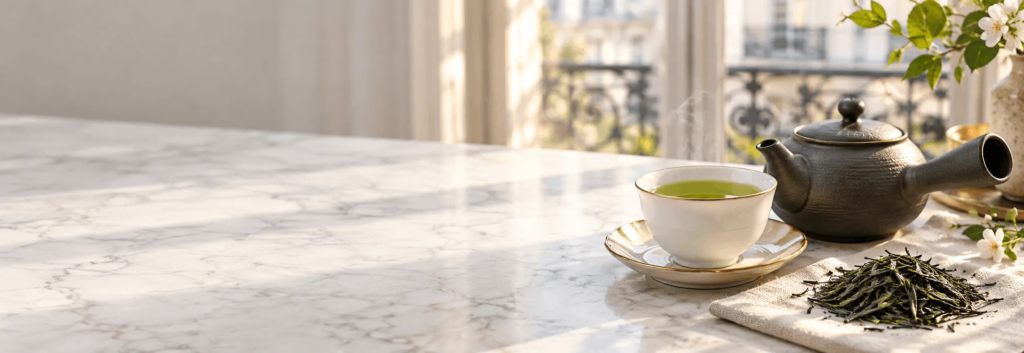
You bought a beautiful tin of Japanese green tea. You boiled the kettle, poured, waited a few minutes, and took a sip.
It was bitter. Grassy in a way that felt like a punishment. So you quietly decided green tea “just isn’t for you” and went back to coffee.
Here is the uncomfortable truth: the tea was probably fine. The water was not.
Japanese sencha is one of the most misunderstood teas in the world. It is also the tea Japan drinks every single day. Once you understand what it is and how it wants to be treated, the same leaves that tasted harsh will taste sweet, bright and almost savoury.
This guide covers everything: what sencha is, how it should taste, how to brew it properly, and how to choose a good one.
What is Japanese sencha?
Sencha is a Japanese green tea made from leaves of the Camellia sinensis plant that are grown in full sun, steamed soon after picking, then rolled into thin, needle-like strands and dried.
It is the everyday tea of Japan. Most of the green tea produced in the country is sencha, and it is what you will be served at home, in offices and in many restaurants.
Three things make sencha different from other green teas:
- Grown in the sun. Unlike matcha and gyokuro, which are shaded before harvest, sencha leaves see full sunlight. This builds more catechins, which give sencha its refreshing, slightly brisk edge.
- Steamed, not pan-fired. Most Chinese green teas are pan-fired, which gives a toasty, nutty flavour. Japanese sencha is steamed, which locks in a vivid green colour and a fresh, marine, vegetal taste.
- Rolled into needles. The rolling shapes the leaf and controls how quickly flavour is released into the cup.
The name itself comes from the method. Sen refers to infusing or simmering, and cha means tea. In short, it is tea made by steeping loose leaves, as opposed to whisking a powder like matcha.
What does sencha taste like?
Good sencha should never taste like boiled spinach. When brewed well, it tastes:
- Fresh and green, like cut grass, young peas or spring herbs
- Gently sweet, especially in the finish
- Lightly savoury, with a soft umami note that tea lovers compare to a mild broth
- Clean and brisk, with a pleasant, short astringency that refreshes rather than dries the mouth
The colour ranges from pale golden-green to a deep, cloudy jade, depending on how long the leaves were steamed.
If your sencha tastes flat, it may be old. If it tastes harsh, it was almost certainly brewed too hot or too long.
Why your sencha tastes bitter
Bitterness in sencha usually comes from catechins and caffeine. Both are released faster as water temperature rises.
The sweet, savoury notes come mainly from amino acids, especially L-theanine. These dissolve well at lower temperatures.
So boiling water does two things at once. It drags out the bitterness and drowns the sweetness. That is why the same leaves can taste completely different at 70°C and at 100°C.
Ask yourself honestly: when did you last check the temperature of the water you pour on your green tea?
How to brew Japanese sencha properly
You do not need a ceremony or special skills. You need cooler water and a shorter wait.
| Step | What to do |
|---|---|
| Leaf | 4–5 g (about 2 teaspoons) per 150–200 ml of water |
| Water temperature | 70–80°C. Let boiled water rest 3–4 minutes, or pour it into the cup first to cool it |
| First steep | 45–60 seconds (30–45 seconds for deep-steamed fukamushi) |
| Second steep | Slightly hotter water, about 20–30 seconds |
| Third steep | Hotter again, about 60–90 seconds |
A few habits make a real difference:
- Pour every last drop. Leaving water on the leaves keeps extracting bitterness and ruins the next infusion.
- Re-steep the leaves. Good sencha gives two or three pleasant infusions. Each one tastes a little different.
- Use soft water if you can. Very hard water dulls the sweetness and fresh aroma.
- Skip the milk and sugar. Sencha is delicate. Try it plain first, then decide.
For summer, try cold brew. Add 10 g of sencha to 1 litre of cold filtered water and refrigerate for 3–6 hours. Cold brewing pulls out sweetness and umami with very little bitterness.
Asamushi, chumushi and fukamushi: the steaming difference
Not all sencha is steamed for the same length of time, and this changes the cup more than most people expect.
| Type | Steaming time | Taste and look |
|---|---|---|
| Asamushi (light steam) | About 20–40 seconds | Clear yellow-green liquor, delicate, floral, more aroma |
| Chumushi (medium steam) | About 40–80 seconds | Balanced, the classic sencha profile |
| Fukamushi (deep steam) | About 80–120 seconds or more | Cloudy, deep green, rich, smooth, less astringent |
If you find sencha too sharp, start with fukamushi. If you love fragrance and clarity, try asamushi.
Is sencha good for you?
Sencha has been part of daily life in Japan for centuries, and researchers have studied green tea extensively. Here is what it naturally contains:
- Catechins, especially EGCG, which are antioxidants widely studied for heart and metabolic health
- L-theanine, an amino acid associated with calm, focused alertness
- Caffeine in moderate amounts
- Vitamin C and small amounts of minerals
Many studies link regular green tea drinking with positive health outcomes. Most of that research is observational, so it shows associations rather than guaranteed effects. Treat sencha as a healthier daily habit, not a cure.
How much caffeine is in sencha?
A typical cup of sencha contains roughly 20–30 mg of caffeine. That is about a third of a regular cup of coffee.
The L-theanine in the leaf tends to soften caffeine’s edge. Many people describe the effect as calm energy rather than a spike and crash.
Caffeine rises with hotter water and longer steeps. If you are sensitive, brew cooler, keep steeps short, or choose cold brew.
Sencha vs matcha: what’s the difference?
| Sencha | Matcha | |
|---|---|---|
| Growing | Full sun | Shaded 3–4 weeks before harvest |
| Form | Rolled loose leaves | Stone-ground powder |
| Preparation | Steeped, leaves removed | Whisked, whole leaf consumed |
| Taste | Fresh, brisk, gently sweet | Rich, creamy, intense umami |
| Caffeine per serving | Lower, about 20–30 mg | Higher, often 60 mg or more |
| Best for | Daily drinking, with meals | A focused, concentrated ritual or lattes |
Matcha is a moment. Sencha is a habit. Many tea lovers keep both.
How to choose a good Japanese sencha
- Look at the leaf. Fine, glossy, deep-green needles suggest careful processing. Dull, brownish or dusty leaf suggests age.
- Check the harvest. First flush sencha, called ichibancha or shincha when sold fresh in spring, is the sweetest and most aromatic.
- Know the origin. Shizuoka is Japan’s best-known sencha region. Kagoshima, Uji and Yame also produce excellent teas with their own character.
- Buy fresh, store well. Keep sencha in an airtight tin, away from light, heat, moisture and strong smells. Once opened, drink it within one to two months.
Food pairings: a French way to enjoy sencha
In France, tea is often treated like wine: something to match with food. Sencha’s freshness makes it a surprisingly versatile partner.
- Fresh goat cheese, where sencha’s brightness cuts the creaminess
- Grilled fish, sushi and seafood, which echo its marine notes
- Light pâtisserie like madeleines, financiers or citrus tarts
- Spring vegetables such as asparagus and peas
Sencha at JANAT Paris
JANAT has blended teas in Paris since 1872. Today, the house is guided by a family with deep roots in Japanese green tea cultivation. That makes sencha more than a product for us. It is the meeting point of our two homes: Parisian refinement and Japanese craft.
Explore JANAT green teas →
Before your next cup
Think back to the last green tea you gave up on. Was it really the tea? Or was it the boiling kettle, the forgotten timer, the leaves left sitting in the pot?
Sencha does not ask for much. Just a little patience and slightly cooler water. Brew one cup the right way this week, and decide for yourself what you have been missing.
FAQ
What is Japanese sencha?
A sun-grown Japanese green tea whose leaves are steamed, rolled into needles and dried. It is Japan’s most widely drunk tea.
What temperature should I brew sencha at?
70–80°C for 45–60 seconds. Boiling water makes it bitter.
Does sencha have caffeine?
Yes, roughly 20–30 mg per cup, about a third of a cup of coffee.
Can I re-steep sencha?
Yes. Good sencha gives two or three infusions; use slightly hotter water and shorter times after the first.
What is the difference between sencha and matcha?
Sencha is sun-grown loose leaf that is steeped; matcha is shade-grown and stone-ground into powder that is whisked.
Find your next cup.
Need help choosing your tea? Tell us what you enjoy, and our team will help you find your next cup.