
The Beginner’s Guide to Understanding Different Types of Tea
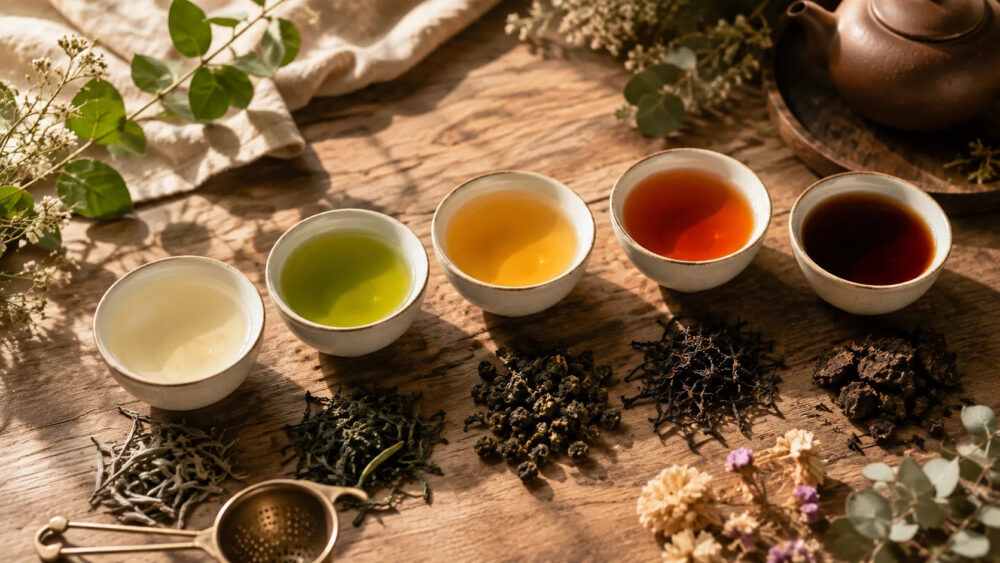
Introduction: One Leaf, So Many Stories
Somewhere in the world, right now, someone is holding a warm cup of tea. Maybe it’s a grandmother in China sipping green tea before sunrise. Maybe it’s a student in London wrapping cold fingers around a mug of black tea with milk. Maybe it’s a friend in Morocco pouring sweet mint tea for guests, or someone in India starting their day with a strong, spiced cup of chai. Different countries, different cups, but the same quiet comfort.
Tea is one of the few things that connects almost every culture on earth. It has been part of human life for thousands of years, long before coffee shops and energy drinks existed. And yet, for something so common, tea remains a little mysterious to many people. Walk into a tea shop and you’ll see shelves full of names like white tea, oolong, pu-erh, and matcha, and it’s easy to feel a bit lost. Are they all made from the same plant? Why does one cup taste light and grassy while another tastes deep and smoky? And where do herbal teas fit into all of this?
This guide is written for exactly that moment of confusion. No complicated terms, no assumptions that you already know the difference between “oxidation” and “fermentation.” Just a simple, friendly walk through the world of tea, written the way an old friend who happens to know a lot about tea would explain it to you over a warm cup.
By the end, you’ll understand what makes each type of tea unique, how they’re made, what they taste like, and how to start exploring them for yourself. Whether you’re a curious beginner or someone who has been drinking tea your whole life but never quite understood the labels, this one is for you.
The Surprising Truth: Most Teas Come From One Plant
Here’s something that surprises a lot of people. White tea, green tea, oolong tea, black tea, and pu-erh tea all come from the very same plant: Camellia sinensis, a type of evergreen shrub that has been cultivated for centuries, mainly in Asia.
So if they all come from the same plant, why do they taste so different?
The answer lies in how the leaves are handled after they’re picked. Think of it a bit like grapes. Grapes can become wine, juice, raisins, or vinegar, depending on how they’re processed. Tea leaves work in a similar way. The same fresh leaf can become a delicate white tea or a bold, dark black tea, depending on the steps it goes through before it reaches your cup.
The main factor that changes everything is called oxidation. In simple terms, oxidation is what happens when the tea leaves are exposed to air after being picked and rolled or bruised. This process is similar to what happens when you cut an apple and leave it out — it slowly turns brown. The longer the tea leaves are allowed to oxidize, the darker and stronger the tea becomes.
- Little to no oxidation gives you white and green teas, which taste light, fresh, and delicate.
- Partial oxidation gives you oolong tea, which sits somewhere in the middle.
- Full oxidation gives you black tea, which is bold, rich, and deeply colored.
- A completely different process, involving aging and sometimes a controlled fermentation, gives you pu-erh tea, known for its earthy, deep flavor.
Once you understand this one idea, the whole world of tea starts to make a lot more sense. You’re not looking at different plants; you’re looking at different choices made by the people who grow and process the leaves.
And then, separately, there are herbal teas, which don’t come from the tea plant at all. We’ll get to those a little later.
Let’s now walk through each type of tea, one by one, so you can get familiar with what makes each one special.
White Tea: The Gentlest Introduction
If tea had a “quietest member of the family,” it would be white tea. It is the least processed of all true teas, made from young tea buds and leaves that are simply picked and allowed to dry naturally, with very little rolling or handling.
Because it goes through so little processing, white tea keeps a lot of its natural, delicate character. The flavor is soft and slightly sweet, often described as light, smooth, and a little floral. There’s no bitterness to fight through, no heavy aftertaste. It’s the tea equivalent of a calm morning.
White tea also tends to be lower in caffeine compared to green or black tea, which makes it a gentle choice for people who are sensitive to caffeine or who simply want something soothing in the evening.
Because the flavor is so subtle, white tea is best brewed with care. Boiling water can overpower its gentle taste, so slightly cooler water and a bit more patience go a long way. Think of white tea as something to sip slowly, not gulp down quickly.
If you’re new to tea and want a starting point that won’t overwhelm your taste buds, white tea is a wonderful, welcoming place to begin.
Green Tea: Fresh, Grassy, and Full of Life
Green tea is probably the most talked-about tea in the world today, largely because of its reputation as a healthy, refreshing choice. Like white tea, green tea is not oxidized. The difference is in the processing: right after picking, the leaves are quickly heated, either by steaming or pan-firing, to stop the oxidation process almost immediately. This step locks in the fresh, green color and the light, grassy flavor that green tea is known for.
Green tea can taste quite different depending on where it’s from and how it’s made. Japanese green teas, like sencha, often have a more vegetal, almost seaweed-like freshness because they’re usually steamed. Chinese green teas are often pan-fired, which can bring out a slightly nutty or toasty flavor.
One important thing to know about green tea is that it can turn bitter if brewed with water that’s too hot or steeped for too long. This is one of the most common mistakes beginners make. Green tea prefers warm, not boiling, water and a shorter steeping time. Treat it gently, and it rewards you with a clean, refreshing cup.
Green tea has become especially popular worldwide because of its association with wellness routines. It’s often the tea people reach for when they want something light, energizing, and easy on the stomach.
Yellow Tea: The Rare and Underrated Cousin
Yellow tea doesn’t get nearly as much attention as its cousins, mostly because it’s rarer and a little harder to find outside of China, where it originated. But it deserves a mention, because it’s a fascinating in-between step in the tea world.
Yellow tea is made in a similar way to green tea, but with one extra step: after the leaves are heated to stop oxidation, they’re wrapped and allowed to sit for a while in a slightly humid, warm environment. This extra step, sometimes called “smothering” or “sealing yellow,” softens the sharper grassy notes of green tea and gives the final cup a smoother, mellower, slightly sweet flavor.
If green tea sometimes feels a little too sharp or grassy for your taste, yellow tea might be the pleasant surprise you didn’t know you were looking for. It’s less common, which also makes it a fun tea to explore if you enjoy discovering something a little different from the usual options.
Oolong Tea: The Tea of Endless Variety
Oolong tea sits right in the middle of the oxidation spectrum, and that middle ground is exactly what makes it so interesting. Depending on how the tea maker chooses to process it, oolong can be lightly oxidized and taste close to green tea, or heavily oxidized and taste closer to black tea. This is why oolong is often described as having the widest range of flavors among all tea types.
A lightly oxidized oolong might taste floral, light, and slightly creamy. A more heavily oxidized oolong might taste roasted, fruity, or even a little like honey. Some oolongs are rolled into tight little balls that slowly unfurl as you steep them, which is a small but delightful thing to watch if you’re brewing loose leaf tea.
Because of this variety, oolong tea can feel like an adventure. Trying different oolongs is a bit like trying different wines from the same grape — each one tells a slightly different story depending on how it was made and where it grew.
Oolong tea often works well for multiple steepings, meaning you can pour hot water over the same leaves several times, and each cup will reveal a slightly different layer of flavor. This makes it a favorite among people who enjoy slowing down and savoring their tea ritual.
Black Tea: Bold, Familiar, and Loved Worldwide
If you’ve ever had a strong cup of English breakfast tea, Irish breakfast tea, or the base tea used in chai, you’ve had black tea. It’s the most widely consumed type of tea across much of the Western world, and it’s also a beloved staple in countries like India and Sri Lanka.
Black tea goes through full oxidation, which is what gives it that deep reddish-brown color and its bold, rich, sometimes malty flavor. Unlike white or green tea, black tea can comfortably handle boiling water and a longer steeping time, which is part of why it’s so popular for everyday drinking — it’s forgiving and consistent.
Black tea also holds up well with milk and sweeteners, which is why so many traditional tea customs around the world, from British afternoon tea to Indian masala chai, are built around it. Its strong flavor doesn’t get lost when combined with other ingredients, unlike the more delicate white and green teas.
In terms of caffeine, black tea generally has the highest caffeine content among true teas, making it a popular choice for a morning pick-me-up.
Famous types of black tea include Assam (bold and malty, often used in chai), Darjeeling (lighter and more delicate, sometimes called the “champagne of teas”), and Ceylon (bright and brisk, from Sri Lanka). Each region brings its own personality to the cup, shaped by soil, climate, and tradition.
Pu-erh Tea: The Tea That Gets Better With Age
Pu-erh tea is one of the most unique and misunderstood types of tea, mostly because it doesn’t follow the same rules as the others. Instead of simply being processed and then sold, pu-erh tea is aged, sometimes for many years, which allows its flavor to develop and deepen over time, a bit like a fine wine or cheese.
There are two main types of pu-erh:
- Raw pu-erh, which is aged naturally over a long period, often years or even decades, developing complexity slowly.
- Ripe pu-erh, which goes through a special controlled process that speeds up the aging, giving it a deep, earthy flavor in a shorter time.
The flavor of pu-erh is often described as earthy, woody, and smooth, sometimes with a hint of sweetness that develops with age. It’s less about a bright, fresh taste and more about depth and richness, almost like drinking a warm forest floor in the best possible way.
Pu-erh tea traditionally comes pressed into round cakes or bricks, which is part of what makes the aging process possible. It’s a favorite among tea collectors and enthusiasts who enjoy comparing how the same tea changes over the years.
If you’re curious about pu-erh, know that it’s a bit of an acquired taste. It won’t taste like the green or black tea you might be used to, but for many people, that’s exactly its appeal.
Herbal Tea: Not Really “Tea” at All
Here’s a fact that surprises many beginners: chamomile tea, peppermint tea, hibiscus tea, and rooibos tea are not technically tea at all. Since they don’t come from the Camellia sinensis plant, tea experts usually call them “tisanes” (pronounced tee-zahns) or herbal infusions rather than true tea.
That said, in everyday language, almost everyone calls them tea, and there’s nothing wrong with that. Herbal teas are made by steeping flowers, herbs, fruits, roots, or spices in hot water. Because they don’t come from the tea plant, most herbal teas are naturally caffeine-free, which makes them a popular choice for evenings or for people who want to avoid caffeine altogether.
Some popular herbal teas include:
- Chamomile, known for its calming, floral flavor, often enjoyed before bed.
- Peppermint, refreshing and cooling, popular after meals.
- Hibiscus, tart and vibrant, often enjoyed cold as well as hot.
- Rooibos, a naturally sweet, reddish tea from South Africa, sometimes called “red tea.”
- Ginger tea, warming and slightly spicy, popular for soothing the stomach.
Herbal teas open up an enormous world of flavor combinations, since they can be made from almost any edible plant. If you enjoy experimenting, herbal teas are a fun and low-pressure way to explore new tastes without worrying about caffeine or complicated brewing rules.
A Quick Word on Matcha
Matcha deserves a special mention because it has become incredibly popular worldwide, especially in cafes and among people interested in wellness. Matcha isn’t a separate type of tea plant — it’s actually a form of green tea. The difference is in how it’s grown and prepared.
Matcha comes from tea leaves that are shaded before harvest, which increases their chlorophyll content and gives them a deeper green color. After harvesting, the leaves are dried and ground into a fine powder. Instead of steeping leaves and removing them, you whisk the matcha powder directly into hot water, which means you’re drinking the entire leaf, not just an infusion.
This gives matcha a richer flavor and a slightly thicker texture compared to regular green tea, along with a more concentrated dose of whatever natural compounds are found in the leaf. It has a distinct, slightly grassy, umami flavor that many people find comforting once they get used to it.
How to Choose the Right Tea for You
With so many options, it can help to think about what you’re actually looking for, rather than trying to memorize every tea type at once. Here are some simple ways to guide your choice:
If you want something light and refreshing — try green tea or white tea. They’re gentle, clean, and easy to drink throughout the day.
If you want something bold and comforting — black tea is your friend. It pairs well with milk, honey, or simply on its own, and it’s forgiving if you accidentally steep it a little too long.
If you enjoy variety and exploration — oolong tea offers an incredible range of flavors within a single category, perfect for someone who likes to try new things.
If you want something deep and complex, almost meditative — pu-erh tea offers a completely different experience, rewarding patience and curiosity.
If you want to avoid caffeine — herbal teas like chamomile, peppermint, or rooibos are naturally caffeine-free and come in endless flavor varieties.
If you’re simply curious and want to explore — start with a sampler pack that includes a few different types, and pay attention to what you naturally reach for again. Your own taste will teach you more than any guide can.
A Simple Guide to Brewing Each Type
Getting the brewing right makes a bigger difference than most beginners expect. The same tea leaves, brewed differently, can taste completely different — one cup smooth and pleasant, another bitter and harsh. Here’s a simple, general guide to help you get started:
- White tea: Use water just below boiling, and steep for about 4 to 5 minutes. Be gentle, since white tea is delicate.
- Green tea: Use water that’s warm but not boiling, and steep for about 2 to 3 minutes. Too hot, too long, and it turns bitter.
- Yellow tea: Similar to green tea — warm water, short steeping time, gentle handling.
- Oolong tea: Use hot, just-below-boiling water, and steep for about 3 to 5 minutes. Many oolongs can be steeped multiple times, so don’t throw the leaves away after just one cup.
- Black tea: Use fully boiling water, and steep for about 3 to 5 minutes. Black tea is sturdy and forgiving, which is part of why it’s so popular for everyday drinking.
- Pu-erh tea: Use boiling water, and consider a quick first rinse of the leaves before the actual steep, which is a traditional step that helps open up the leaves and remove any dust from aging. Steep for a few minutes, and feel free to re-steep multiple times.
- Herbal tea: Use boiling water, and steep for about 5 to 7 minutes, since herbs and flowers often take a little longer to release their full flavor.
These are simple starting points, not strict rules. As you drink more tea, you’ll start to notice your own preferences — maybe you like your green tea a little stronger, or your black tea steeped a bit shorter. That’s completely normal, and it’s part of the joy of learning to love tea in your own way.
Tea as a Shared Human Ritual
What makes tea so special isn’t just the flavor in the cup. It’s the pause it creates. Across the world, tea has always been more than a drink — it’s an invitation to slow down, to sit with a friend, to welcome a stranger, or to simply give yourself a quiet moment in a busy day.
In Japan, the tea ceremony turns the simple act of preparing matcha into a mindful, almost sacred ritual. In the UK, afternoon tea became a cherished social tradition. In the Middle East, offering tea to a guest is a basic expression of hospitality. In China, tea culture stretches back thousands of years, deeply woven into philosophy, medicine, and daily life. And in homes everywhere, a simple cup of tea often marks the small, comforting rhythms of the day — the first sip in the morning, a break in the afternoon, or a quiet moment before bed.
Understanding the different types of tea isn’t just about knowing facts. It’s about giving yourself the tools to explore this shared human tradition a little more fully, one cup at a time.
Final Thoughts: Your Tea Journey Is Just Beginning
If you started this article unsure of the difference between white tea and oolong, or wondering why green tea sometimes tastes bitter, hopefully things feel a little clearer now. At its heart, tea isn’t complicated — it’s simply the story of one plant, treated in different ways, creating an entire world of flavors.
You don’t need to become an expert overnight. The best way to learn about tea is the most enjoyable way: by drinking it. Try a new type each week. Pay attention to how it smells before you even take a sip. Notice how the flavor changes depending on how long you steep it. Ask questions at your local tea shop. Let your curiosity lead the way.
Tea has been bringing people together for thousands of years, across every corner of the world. Now, with a little more understanding, you’re ready to become part of that story too — one warm, thoughtful cup at a time.
Frequently Asked Questions
Is herbal tea actually tea?
Not technically. True tea comes from the Camellia sinensis plant, while herbal teas (or tisanes) are made from other plants, flowers, or herbs. Both are commonly called “tea” in everyday conversation.
Which tea has the most caffeine?
Black tea generally has the highest caffeine content among true teas, followed by oolong, green, and white tea, which tend to have progressively less.
Can I re-steep tea leaves?
Yes, especially oolong and pu-erh tea, which are well known for producing several good cups from the same leaves.
What’s the healthiest type of tea?
All true teas offer their own natural benefits, and herbal teas can be a great caffeine-free option. Rather than searching for a single “best” tea, it’s more helpful to choose based on your taste preferences and how your body responds to caffeine.
How should I store my tea? Keep tea in an airtight container, away from direct sunlight, moisture, and strong odors, since tea leaves can easily absorb smells from their surroundings.
Find your next cup.
Need help choosing your tea? Tell us what you enjoy, and our team will help you find your next cup.