
Loose Leaf Tea vs Tea Bags: Which Should You Choose?
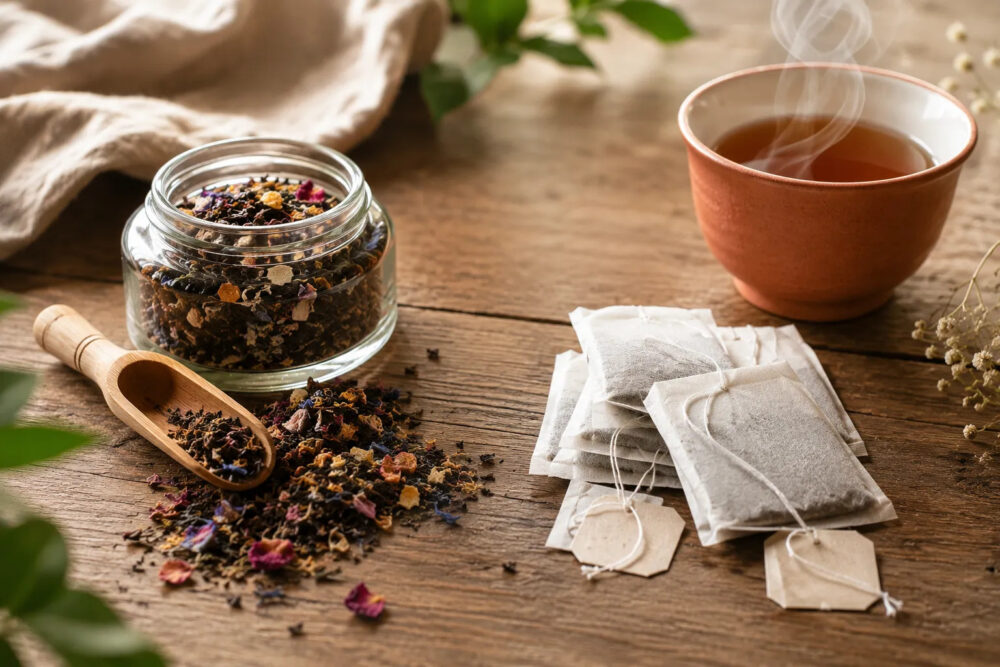
There is a moment that almost every tea lover knows well, whether they are standing in a compact Tokyo apartment kitchen, a sunlit majlis in Dubai, or a cosy Parisian flat overlooking a quiet street. The kettle begins to hum, and you reach for your tea. In that split second, you make a small decision that shapes the next few minutes of your day. Do you pick up a familiar little bag with a string and a tag, or do you reach for a tin of loose, curled leaves that need a bit more care?
This small choice may feel simple, but it says a lot about how you like to experience tea. Some people want speed and simplicity. Others want to slow down and enjoy the ritual. Neither way is wrong. But if you have ever wondered whether one is truly “better” than the other, you are not alone. Tea drinkers from Tokyo to Dubai, from Paris to every corner of the globe, ask this same question every single day.
In this guide, we will walk through everything you need to know about loose leaf tea and tea bags. No confusing tea jargon, no complicated brewing science. Just honest, simple information to help you decide what suits your taste, your budget, and your lifestyle. By the end, you will know exactly which one deserves a place in your cup.
A Quick Look at the Two Options
Before we go deeper, let’s understand what we are actually comparing.
Loose leaf tea is tea in its most natural form. The leaves are whole or broken into large pieces, and you scoop out however much you need, usually with a spoon or infuser. Nothing is packed inside paper or nylon. You see the actual leaves, and often, you can even recognize the shape of the tea plant they came from.
Tea bags, on the other hand, are small pouches filled with tea, usually finely chopped or crushed into tiny pieces. You simply drop the bag into hot water, let it sit for a few minutes, and remove it once done. It is designed purely for convenience.
Both come from the same tea plant, Camellia sinensis. The difference lies in how the tea is processed, packaged, and eventually brewed in your cup.
Why This Question Matters to Tea Lovers Everywhere
Tea is not just a drink. For many people, it is a quiet part of their morning routine, a comfort during a stressful day, or a warm gesture of hospitality when guests arrive. Because tea plays such a personal role in daily life, the way you prepare it matters more than you might think.
Someone rushing to catch the metro in Tokyo might not have five minutes to measure loose leaves and clean an infuser. Someone hosting guests in a sunlit Dubai majlis might reach for a beautifully brewed pot as a gesture of warmth and hospitality. Someone enjoying a slow Sunday afternoon in a Parisian café might treat tea brewing as a small, peaceful ritual. All of these are valid ways to enjoy tea, but the tools you use can make a real difference in taste, aroma, and overall satisfaction.
This is why understanding the difference between loose leaf tea and tea bags is not just useful for tea experts. It is useful for anyone who wants their daily cup to taste a little better.
The Biggest Difference: Leaf Size and Quality
This is where the real difference begins, and it affects everything else that follows.
Loose leaf tea usually contains whole leaves or large broken pieces. These leaves have had less processing done to them, which means they hold on to more of their natural oils, aroma, and flavor. When you brew loose leaf tea, the leaves have room to expand fully in the water. This is often called “the agony of the leaves,” a poetic way of describing how the leaves slowly unfurl and release their flavor as they steep.
Tea bags, especially the mass-produced kind found in supermarkets, often contain what is known as “fannings” or “dust.” These are the smallest, leftover particles of tea leaves after the larger, higher-quality leaves have been sorted out for other products. Because the pieces are so small, they lose freshness and flavor much faster.
This does not mean all tea bags are low quality. In recent years, many premium tea brands have started using pyramid-shaped bags filled with whole or large-leaf tea, giving you a taste much closer to loose leaf tea. So while traditional tea bags are usually lower in quality, this is slowly changing across the tea industry.
Taste and Aroma: What Your Tongue Will Notice
If you have ever tasted loose leaf tea and tea bag tea side by side, you may have noticed a difference right away. Loose leaf tea generally offers a fuller, richer, and more layered flavor. Because the leaves are larger and less broken, they release their natural compounds slowly and evenly during brewing.
Tea bags, especially those filled with tiny tea dust, tend to brew faster but can sometimes taste flatter or slightly bitter. This happens because the small particles release their flavor very quickly, including some of the more bitter compounds, especially if the tea is left steeping for too long.
Aroma follows a similar pattern. Good quality loose leaf tea often has a noticeably stronger scent when you open the container, thanks to the natural oils preserved in the whole leaves. Tea bags, particularly those sitting in a cardboard box for months, tend to have a milder, sometimes dusty smell.
That said, taste is deeply personal. Many people grew up drinking tea bag tea and genuinely enjoy its familiar, simple flavor. There is no single “correct” taste when it comes to tea. It is about what brings you comfort and joy in your cup.
Health and Freshness Considerations
Fresh tea leaves generally contain more of the natural compounds that make tea beneficial, such as antioxidants. Because loose leaf tea is less processed and often fresher, it may retain slightly higher levels of these natural compounds compared to tea bags, which can sit on shelves for longer periods before being used.
Another point worth mentioning is what the tea bag itself is made of. Traditional paper tea bags are generally safe, but some modern tea bags are made from nylon or plastic-based materials designed to be see-through or “silky” in appearance. Some recent studies have raised concerns about tiny plastic particles releasing into hot water from these materials. If this is something that concerns you, checking the tea bag material or simply choosing loose leaf tea can help you avoid the issue altogether.
It is worth noting that this article is meant to give general, simple guidance. If you have specific health concerns about tea consumption, especially regarding caffeine intake or any medical condition, it is always a good idea to speak with a healthcare professional who can guide you based on your personal situation.
Convenience: The Everyday Reality
Let’s be honest. Life is busy, and not everyone has time for a slow tea ritual every single morning.
Tea bags win clearly when it comes to convenience. There is no measuring, no straining, and no cleanup beyond tossing the used bag away. You can make a cup of tea bag in under a minute, which is perfect for busy mornings, office breaks, or when you are travelling.
Loose leaf tea requires a bit more effort. You need a way to hold the leaves while they steep, such as an infuser, a strainer, or a teapot with a built-in filter. You also need to measure the right amount of tea, which usually means keeping a small spoon nearby. Afterward, you need to clean out the used leaves, which takes a few extra minutes.
For someone who values speed above all else, tea bags are the practical choice. For someone who enjoys the process of making tea as much as drinking it, loose leaf tea offers a small, satisfying ritual worth the extra effort.
Cost: Which One Saves You More Money?
At first glance, tea bags might seem cheaper because supermarket boxes are often sold at low prices. However, when you calculate the cost per cup more carefully, the picture can look quite different.
Loose leaf tea is usually sold in bulk, and a little goes a long way. Because you control exactly how much tea you use, you can often stretch a bag of loose leaf tea across many more cups than you would expect. Many loose leaf teas can also be steeped more than once, sometimes two or three times, with each steeping revealing slightly different notes of flavor. This means you get more value from the same amount of tea.
Tea bags are designed for single use. Once you have brewed your cup, that bag is typically thrown away, even though there may still be some flavor left in the leaves.
So while the upfront price of loose leaf tea can look higher, especially for specialty or premium varieties, the actual cost per cup often ends up being similar or even lower over time, particularly if you enjoy multiple steepings.
Variety and Choice: Exploring the World of Tea
One of the most exciting parts of drinking loose leaf tea is the sheer variety available. Because loose leaf tea is less processed, tea sellers can offer a wide range of options, from delicate white teas and floral oolongs to smoky black teas and earthy pu-erh. You can often find loose leaf teas that highlight a specific region, harvest season, or even a particular tea garden.
Tea bags, especially the ones found in regular supermarkets, tend to focus on more common categories like standard black tea, green tea, or basic herbal blends. While premium tea bag brands are expanding their offerings, the overall variety still cannot fully match what loose leaf tea provides.
If you are someone who loves exploring new flavors and learning about different tea-growing regions around the world, loose leaf tea opens up a much richer and more adventurous experience.
Environmental Impact: A Growing Concern
As more people become conscious about sustainability, the environmental impact of tea bags has become an important topic.
Many tea bags, especially the modern pyramid-shaped ones, contain a small amount of plastic to help seal the bag shut. This means they may not fully break down in composting systems and can contribute to plastic waste. Even traditional paper tea bags often use a small amount of glue or sealant that is not always compostable.
Loose leaf tea, when stored in reusable tins or eco-friendly packaging, generally produces less waste. The used leaves themselves are fully natural and can often be composted directly, adding nutrients back into the soil.
If reducing your environmental footprint is important to you, loose leaf tea paired with a reusable infuser is generally the more eco-friendly choice. However, it is worth checking with your tea bag brand, as some companies have started producing fully biodegradable, plastic-free tea bags in response to growing consumer demand.
Brewing Control: Making Tea Exactly the Way You Like It
Loose leaf tea gives you far more control over your final cup. You decide how many leaves to use, how hot the water should be, and how long to let it steep. This level of control allows you to fine-tune your tea exactly to your taste, whether you prefer it light and delicate or strong and bold.
Tea bags offer much less flexibility. Since the tea is pre-measured and sealed inside, your main control is how long you leave the bag in the water. This works fine for most people, but it does not allow the same depth of customization that loose leaf tea offers.
For tea lovers who enjoy experimenting, adjusting brewing times, water temperature, and leaf quantity can be part of the fun. For those who simply want a reliable, consistent cup every time without much thought, tea bags remove the guesswork.
Storage and Shelf Life
Loose leaf tea generally needs a little more care when it comes to storage. It should be kept in an airtight container, away from direct sunlight, moisture, and strong odors, since the leaves can easily absorb smells from their surroundings. When stored properly, loose leaf tea can stay fresh and flavorful for a long time.
Tea bags are more forgiving in this regard. Their individual packaging offers some natural protection, making them easier to store and less likely to lose freshness quickly, even if you are not extremely careful about storage conditions.
If you already have a habit of storing food properly and enjoy organizing your kitchen with nice containers, loose leaf tea storage will feel effortless. If you prefer a low-maintenance approach, tea bags require less thought.
Which One Should You Choose?
By now, you can probably see that there is no single right answer. It truly depends on what matters most to you.
Choose loose leaf tea if:
You enjoy a richer, more flavorful cup of tea. You like exploring different tea varieties from around the world. You do not mind spending a few extra minutes on your tea ritual. You care about reducing plastic waste. You want more control over the strength and taste of your tea.
Choose tea bags if:
You need a quick and simple way to make tea, especially on busy mornings. You are new to tea and want an easy, no-fuss starting point. You travel often and need something portable and mess-free. You prefer consistency over experimentation. You are looking for budget-friendly options in the short term.
Many tea lovers, in fact, use both. They might keep a box of tea bags for quick weekday mornings and a small collection of loose leaf teas for quiet weekend afternoons. There is no rule that says you must choose only one. Tea is meant to fit into your life, not the other way around.
A Few Simple Tips for Brewing Either One
If you decide to try loose leaf tea, start with about one teaspoon of leaves per cup, and adjust based on your taste. Use a simple mesh infuser or strainer if you do not have a teapot with a built-in filter. Pay attention to water temperature, as delicate teas like green or white tea generally prefer cooler water, while black teas can handle hotter water.
If you are sticking with tea bags, try not to squeeze the bag too hard when removing it, as this can release bitter compounds. Also, avoid leaving the bag in for too long if you prefer a milder taste. A simple timer on your phone can help you brew consistently every time.
Whichever method you choose, using fresh, clean water and paying attention to steeping time will always improve your cup, more than almost any other single factor.
Final Thoughts
At the heart of this comparison is a simple truth: tea is meant to be enjoyed, not overthought. Whether you reach for a delicate handful of loose leaves or a familiar tea bag, what matters most is that your cup brings you a small moment of comfort, warmth, and joy.
Loose leaf tea offers richer flavor, more variety, and a more mindful experience, making it a wonderful choice for those who want to slow down and savor their tea. Tea bags offer speed, simplicity, and consistency, making them a practical companion for busy, everyday life.
There is no wrong choice here, only the one that fits your day, your mood, and your taste. So the next time you stand in your kitchen, whether it overlooks the neon skyline of Tokyo, the golden towers of Dubai, or the quiet rooftops of Paris, with the kettle humming softly in the background, trust yourself to choose the cup that feels right for that moment. After all, that is what tea has always been about, a small, personal comfort shared by people all around the world, one warm cup at a time.
Find your next cup.
Need help choosing your tea? Tell us what you enjoy, and our team will help you find your next cup.