
Tea Rituals Around the World You’ve Probably Never Heard Of
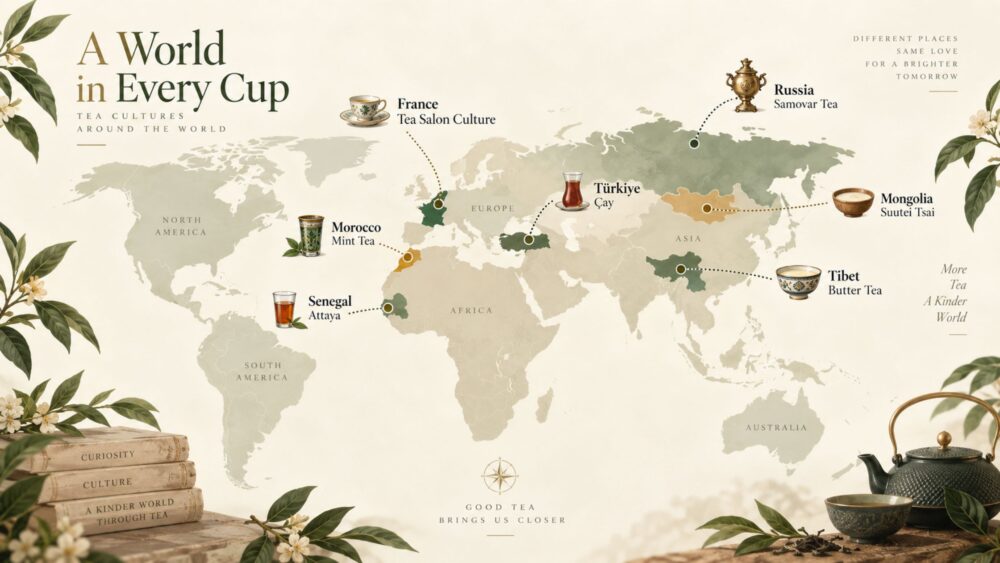
A cup of tea can look very simple.
Hot water. Tea leaves. A cup. A few quiet minutes.
But travel around the world and tea becomes something much bigger.
In one country, tea may be poured from high above the glass. Somewhere else, it may be mixed with milk and salt. In another place, preparing tea slowly is almost as important as drinking it.
For centuries, people have used tea to welcome guests, start conversations, celebrate important moments and simply slow down at the end of a long day.
At JANAT Paris, tea has also always been connected with travel, discovery and sharing. Founded in France in 1872, JANAT’s story brings together French tea culture with teas and flavours inspired by different parts of the world.
So pour yourself a cup and join us on a journey through some of the world’s most interesting tea rituals.
Some may surprise you.
1. Senegal: Attaya Is Tea That Cannot Be Rushed
Imagine sitting with friends and spending a long afternoon making just a few small glasses of tea.
That is part of the beauty of attaya, a tea tradition found in Senegal and other parts of West Africa.
Attaya is not designed for people in a hurry.
The preparation takes time, which creates an opportunity for people to sit together, talk and enjoy each other’s company. In Senegalese tea culture, it is traditionally prepared and served in several rounds.
The ritual therefore isn’t only about what is inside the glass.
It is about everything that happens between the glasses.
Stories are exchanged. Friends talk. Visitors become part of the gathering.
What we can learn from attaya
Tea doesn’t always need to be something you drink while answering emails or rushing out of the door.
Sometimes the best tea ritual is simply giving yourself enough time to enjoy it.
2. Tibet: Tea Can Be Salty Instead of Sweet
When most people imagine tea, they probably think of sugar, lemon or milk.
Tibetan tea traditions can be very different.
Traditional Tibetan butter tea belongs to a family of drinks made using tea along with salt and dairy fat. Recipes and preparation vary between Tibetan communities, so there isn’t one single version that represents every household.
For someone accustomed to Earl Grey or fruit tea, the first taste might be surprising.
But that is exactly what makes exploring global tea culture so interesting.
The definition of a “normal cup of tea” completely changes depending on where you are in the world.
What we can learn from Tibetan tea
Don’t be afraid to experiment.
Tea can be floral, fruity, smoky, creamy, spicy or refreshing. Exploring tea becomes much more interesting once you stop expecting every cup to taste the same.
3. Mongolia: Milk Tea With a Pinch of Salt
Travel north into Mongolia and you will discover another unusual tea tradition: suutei tsai, commonly described as Mongolian milk tea.
It traditionally combines tea, milk and salt, although ingredients and preparation can vary from one family or region to another.
Instead of being treated purely as a sweet afternoon drink, tea becomes part of everyday nourishment and hospitality.
The combination may sound unexpected if you normally drink black tea with sugar, but the principle behind it feels very familiar:
A warm drink is offered as a welcoming gesture.
Across cultures, that idea appears again and again.
4. Azerbaijan and Türkiye: A Small Glass With a Big Meaning
Tea culture in Azerbaijan and Türkiye is so important that UNESCO added the shared culture of çay to its Representative List of the Intangible Cultural Heritage of Humanity in 2022.
Black tea is commonly served freshly brewed and hot in distinctive pear-shaped glasses.
But again, the real story isn’t the glass.
Tea is closely connected with hospitality and social interaction. It can accompany everyday conversations, visitors and important life occasions. Sweets, sugar, lemon, dried fruits or preserves may also be served alongside it.
A small glass can therefore communicate something much bigger:
Stay for a while. You are welcome here.
Try this idea at home
You don’t need traditional equipment to borrow the spirit of the ritual.
Put your phone aside, serve your tea in your favourite glass or cup, add something small to eat and actually sit with the person you’re sharing it with.
The ritual is often created by attention, not expensive teaware.
5. Russia: The Samovar Keeps the Conversation Going
Traditional Russian tea culture developed around an object that became almost as famous as the tea itself: the samovar.
A samovar keeps hot water available, while a concentrated brew known as zavarka can be diluted according to each drinker’s preferred strength. Tea has traditionally been accompanied by foods or flavourings such as jam and lemon.
This makes tea wonderfully flexible.
One person can prepare a lighter cup. Another can make theirs strong.
And because the hot water remains available, tea can continue through a long conversation.
The lesson from the samovar
A tea ritual doesn’t have to end after one cup.
Sometimes tea is simply the background to something more important — conversation.
6. Morocco: Why Is Tea Poured From So High?
If you ever watch Moroccan mint tea being served, one thing immediately catches your eye:
The teapot rises.
Tea is poured in a long stream into small glasses below.
Moroccan mint tea is commonly prepared with green tea, fresh mint and sugar, and serving it is strongly associated with hospitality.
The preparation becomes part of the experience.
You hear the tea entering the glass.
You smell the mint.
You see the colour.
And you wait before you drink.
Modern life often tries to make everything faster. Moroccan tea culture reminds us that sometimes a little ceremony makes an everyday drink feel special.
7. France: Tea Time Without All the Rules
France may be famous for coffee, but it has developed its own elegant relationship with tea.
Rather than following one rigid ceremony, French tea culture often focuses on flavour, presentation and taking a deliberate break.
One familiar French afternoon tradition is le goûter — a late-afternoon snack that can become a perfect moment for tea, pastries or something sweet.
French tea culture has also embraced scented teas, fruit blends, herbal infusions and tisanes. JANAT’s own French tea guide describes herbal and fruit infusions as particularly popular for evening drinking because many are naturally caffeine-free.
And this leads us to perhaps the easiest tea ritual to introduce into your own life.
Your Next Tea Ritual Could Start After Dinner
Many of the world’s traditional tea rituals have one thing in common:
They ask us to slow down.
But there can be one small problem with enjoying tea later in the day.
Caffeine.
Traditional black and green teas naturally contain caffeine. That doesn’t mean your evening tea ritual has to disappear.
Instead, you can explore naturally caffeine-free herbal and rooibos infusions.
JANAT’s Garden Series includes options such as:
- Camomile — soft and floral
- Peppermint — fresh and cooling
- Rosehip & Hibiscus — bright and pleasantly tart
- Rooibos & Orange — naturally caffeine-free with a citrus character
- Rooibos & Vanilla — smooth rooibos with vanilla notes
JANAT specifically describes rooibos as caffeine-free, while herbal infusions without Camellia sinensis tea leaves are generally naturally caffeine-free.
That makes them interesting choices when you want the ritual of making tea without necessarily choosing a traditional caffeinated black tea.
Decaf vs Caffeine-Free Tea: What’s the Difference?
These two terms are often used as though they mean exactly the same thing, but there is an important difference.
Decaffeinated tea normally begins as tea from the Camellia sinensis plant and then goes through a process to remove most of its caffeine.
Naturally caffeine-free infusions don’t contain traditional tea leaves in the first place. Rooibos, camomile and peppermint are examples.
So if you’re searching for “decaf tea,” it can be worth looking at both categories.
Your ideal evening drink may actually be a naturally caffeine-free infusion rather than a decaffeinated black tea.
Create Your Own 15-Minute Tea Ritual
You don’t need a samovar, elaborate teapot or formal ceremony.
Start with something much simpler.
Choose one tea you genuinely enjoy. Use a cup that feels good in your hands. Put your phone somewhere else. Give the tea time to brew properly.
Then spend 15 minutes doing nothing that needs to be productive.
Read.
Talk.
Look out of the window.
Listen to music.
Or simply drink your tea.
That is enough.
Because after travelling through all these tea traditions, perhaps the biggest lesson isn’t how people prepare their tea.
It’s why they make time for it.
Looking for a Tea You Can Enjoy Later in the Day?
Your tea journey doesn’t have to finish when the afternoon does.
If you enjoy the ritual of tea but want to reduce or avoid caffeine, explore JANAT’s naturally caffeine-free selections or contact JANAT to ask about the decaf and caffeine-free teas currently available in your market.
Whether your taste is floral, refreshing, fruity or smooth, the JANAT team can help you discover an option that suits your own tea ritual.
→ Explore JANAT Tea Collections
→ Enquire About Decaf & Caffeine-Free Tea Options
JANAT currently presents ten main tea collections on its website and also provides an enquiry route for customers, retailers, hotels, restaurants and distributors looking for specific products or availability.
FAQs about Tea Rituals around the world
1. What are some unique tea rituals around the world?
Tea rituals vary widely between cultures. Examples include Senegalese attaya, Moroccan mint tea poured from a height, Turkish çay served in small glasses, Tibetan butter tea, Mongolian milk tea and Russian tea traditionally prepared with a samovar. Each ritual reflects local ideas around hospitality, conversation and daily life.
2. Why is tea important in so many cultures?
Tea is more than a drink in many parts of the world. It is often used to welcome guests, bring families and friends together, mark special occasions or create a quiet moment during the day. The preparation and sharing of tea can be just as important as the tea itself.
3. Can I create my own tea ritual at home?
Yes. A personal tea ritual can be very simple. Choose a tea you enjoy, prepare it slowly, use your favourite cup and spend a few minutes away from your phone or other distractions. The goal is to create a relaxing moment rather than follow strict rules.
4. Which tea is suitable for an evening tea ritual?
People who want to limit caffeine in the evening can consider naturally caffeine-free herbal or rooibos infusions. Camomile, peppermint and rooibos-based blends are popular choices for a relaxing evening cup.
5. What is the difference between decaf tea and caffeine-free tea?
Decaffeinated tea usually starts with traditional tea leaves and has most of its caffeine removed through a decaffeination process. Naturally caffeine-free drinks such as rooibos, camomile and peppermint do not naturally contain the caffeine found in black or green tea.
6. Does JANAT offer caffeine-free tea options?
JANAT offers herbal and rooibos-based selections that can provide naturally caffeine-free alternatives to traditional black and green teas. Availability may vary by country, so customers can explore JANAT’s current collection or contact the JANAT team for suitable options.
7. Can caffeine-free tea still have a strong flavour?
Yes. Caffeine-free infusions can offer a wide range of flavours. Rooibos can be smooth and naturally mellow, peppermint is fresh and cooling, while fruit and floral infusions can provide bright, aromatic flavours without relying on traditional tea leaves.
8. How can I find the right JANAT tea for my evening routine?
Start by thinking about the flavours you prefer, such as floral, fruity, refreshing or smooth. You can then explore JANAT’s herbal, rooibos and other low- or no-caffeine options, or enquire with JANAT for help choosing a tea that suits your preferred time of day and taste.
Find your next cup.
Need help choosing your tea? Tell us what you enjoy, and our team will help you find your next cup.