
20 Best Fruit Tea Flavours to Try Hot or Iced
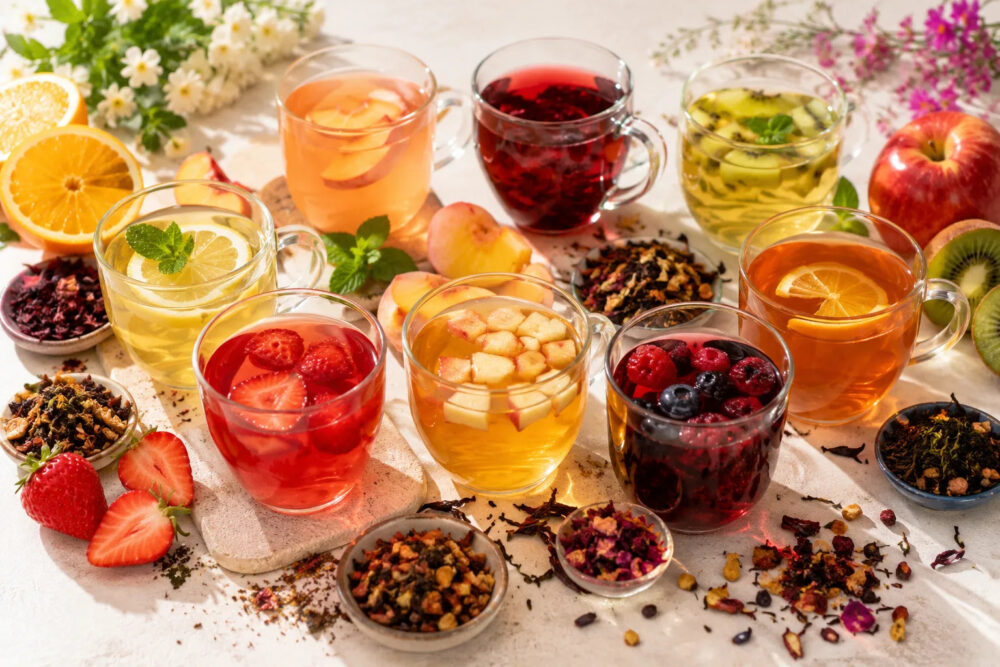
Some fruit teas taste like biting into ripe peach at the height of summer. Others carry the tart snap of raspberry, the soft sweetness of pear, or the warm, spiced comfort of apple and cinnamon steeped on a cold afternoon. That range is what makes fruit tea one of the most versatile categories in the tea world — it can be bright and citrusy one day, tropical and juicy the next, or rich and dessert-like when the weather turns cooler.
Some flavours are built for ice, sunshine, and long afternoons. Others come alive in a warm cup, filling a room with fragrance the moment the water hits the leaves. This guide walks through 20 fruit tea flavours worth knowing, how they taste, when they shine, and how to choose the right one — whether you’re new to fruit tea or already have a favourite and want to explore further.
What Is Fruit Tea?
“Fruit tea” is a broad term, and it doesn’t always mean the same thing from one packet to the next. Understanding the differences helps you choose more confidently.
- Fruit infusions or tisanes — made from dried fruit pieces, petals, and herbs, with no tea leaves at all. These are naturally caffeine-free.
- Black tea flavoured or blended with fruit — traditional black tea (from Camellia sinensis) combined with fruit flavouring, fruit pieces, or peel. This retains the tannins, body, and caffeine of black tea.
- Green tea with fruit — lighter-bodied green tea paired with fruit notes such as citrus or berries, offering a fresher, more delicate profile.
- Rooibos with fruit — naturally caffeine-free South African rooibos blended with fruit or floral notes, giving a smooth, slightly earthy base.
- Blends with dried fruit, peel, flowers, or natural flavouring — a broader category that layers dried fruit pieces or botanical elements onto a tea or herbal base for extra depth and aroma.
The key point: not every fruit tea is caffeine-free. A fruit-flavoured black or green tea still contains caffeine, while a pure fruit or herbal infusion typically doesn’t. Always check whether a product has a tea base or is a pure infusion before assuming either way.
Quick Guide – Find Your Fruit Tea Flavour
| Taste Preference | Fruit Tea Flavours to Explore | Try Hot or Iced? |
|---|---|---|
| Sweet & Juicy | Peach, strawberry, pear | Both |
| Tart & Refreshing | Raspberry, hibiscus, cranberry | Iced / Both |
| Citrusy | Orange, lemon, yuzu | Both |
| Tropical | Mango, passion fruit, pineapple | Iced |
| Floral-Fruity | Peach & rose, strawberry & hibiscus | Both |
| Rich & Sweet | Apple & caramel, berry & vanilla | Hot / Both |
20 Best Fruit Tea Flavours to Explore
1. Peach
Taste: Juicy, rounded, with a gentle sweetness that rarely tips into sugary.
Aroma: Soft, fruity, faintly floral.
Works well with: Black tea, white tea.
Best served: Both.
Good for: Drinkers who want an approachable, crowd-pleasing flavour.
Pairing: Shortbread or a light almond biscuit.
2. Strawberry
Taste: Bright, sweet, with a light tartness on the finish.
Aroma: Fresh and candy-like without being artificial when done well.
Works well with: Black tea, green tea, herbal bases.
Best served: Both.
Good for: Beginners and anyone drawn to familiar, comforting fruit notes.
Pairing: Vanilla cake or fresh berries.
3. Apple
Taste: Crisp with a mellow sweetness, sometimes with a subtle tartness depending on the blend.
Aroma: Warm, orchard-like, especially pleasant in cooler months.
Works well with: Black tea, particularly richer or oak-aged styles.
Best served: Hot.
Good for: Those who enjoy dessert-adjacent, cosy flavours.
Pairing: Cinnamon pastries or baked desserts.
4. Raspberry
Taste: Tart and vibrant, with a natural sharpness that cuts through sweetness.
Aroma: Sharp, fruity, slightly floral.
Works well with: Black tea, herbal infusions.
Best served: Iced.
Good for: Fans of tart, refreshing flavours over sweet ones.
Pairing: Dark chocolate.
5. Mango
Taste: Rich, sweet, and distinctly tropical, with a soft creaminess on the palate.
Aroma: Heady, sweet, sun-ripened.
Works well with: Green tea, herbal infusions.
Best served: Iced.
Good for: Drinkers who enjoy bold, holiday-style flavours.
Pairing: Coconut desserts.
6. Passion Fruit
Taste: Tangy and tropical, balancing sweetness with a distinct tartness.
Aroma: Fragrant, exotic, instantly recognisable.
Works well with: Black tea, green tea.
Best served: Iced.
Good for: Those who like layered, slightly complex tropical notes.
Pairing: Citrus tarts.
7. Orange
Taste: Bright and zesty, ranging from sweet to more bittersweet depending on the blend.
Aroma: Fresh, citrus-forward, uplifting.
Works well with: Black tea, rooibos.
Best served: Both.
Good for: Fans of classic, dependable citrus flavour.
Pairing: Dark chocolate or spiced biscuits.
8. Lemon
Taste: Sharp, clean, and refreshing rather than sweet.
Aroma: Zesty and instantly recognisable.
Works well with: Black tea, green tea.
Best served: Iced.
Good for: Drinkers who prefer minimal sweetness and maximum freshness.
Pairing: Light sponge cake.
9. Yuzu
Taste: A more complex citrus note than lemon — tart, slightly floral, with a distinct Japanese citrus character.
Aroma: Bright and aromatic, less sharp than lemon alone.
Works well with: Green tea, black tea.
Best served: Both.
Good for: Tea drinkers curious about citrus flavours beyond the usual lemon or orange.
Pairing: Delicate rice-based sweets.
10. Pear
Taste: Soft, mellow, gently sweet without sharp edges.
Aroma: Subtle, delicate, slightly floral.
Works well with: Black tea, white tea.
Best served: Both.
Good for: Those who prefer quieter, less intense fruit flavours.
Pairing: Soft cheeses or light pastries.
11. Cherry
Taste: Sweet with a characteristic tartness, reminiscent of dark cherries.
Aroma: Rich, fruity, slightly deep.
Works well with: Black tea.
Best served: Both.
Good for: Drinkers who enjoy a fruitier, slightly indulgent cup.
Pairing: Chocolate desserts.
12. Blueberry
Taste: Sweet, mild, with a gentle earthy undertone.
Aroma: Soft and fruity.
Works well with: Black tea, green tea.
Best served: Both.
Good for: Those who like subtle, easy-drinking berry flavours.
Pairing: Muffins or granola-based snacks.
13. Blackberry
Taste: Deeper and slightly more tart than blueberry, with a rounder finish.
Aroma: Rich, berry-forward.
Works well with: Black tea, rooibos.
Best served: Both.
Good for: Fans of darker, more robust berry notes.
Pairing: Dark chocolate or berry crumble.
14. Strawberry & Kiwi
Taste: Sweet strawberry rounded out by kiwi’s light tartness and green freshness.
Aroma: Bright and fruity, with a fresh, slightly tangy edge.
Works well with: Green tea, herbal infusions.
Best served: Iced.
Good for: Drinkers who enjoy layered, multi-fruit blends.
Pairing: Fresh fruit salad.
15. Peach & Pear
Taste: Two soft, gentle fruits combined for a rounded, easy-drinking sweetness.
Aroma: Delicate and orchard-like.
Works well with: Black tea, white tea.
Best served: Both.
Good for: Those who want something mellow rather than bold or tart.
Pairing: Almond biscotti.
16. Forest Fruits / Mixed Berries
Taste: A blend of berries — often raspberry, blackberry, and blueberry — giving depth, sweetness, and tartness together.
Aroma: Rich and layered, distinctly berry-forward.
Works well with: Black tea, herbal infusions.
Best served: Both.
Good for: Drinkers who want complexity rather than a single-note fruit flavour.
Pairing: Berry tarts or cheesecake.
17. Apple & Cinnamon
Taste: Warm and spiced, with apple’s sweetness balanced by cinnamon’s gentle heat.
Aroma: Cosy, bakery-like, especially inviting when brewed hot.
Works well with: Black tea.
Best served: Hot.
Good for: Those who love comforting, dessert-like flavours in cooler months.
Pairing: Apple pie or spiced cake.
18. Rooibos & Orange
Taste: Naturally sweet, slightly earthy rooibos lifted by bright citrus.
Aroma: Warm and citrusy, with rooibos’s characteristic woodiness underneath.
Works well with: Rooibos (naturally caffeine-free).
Best served: Both.
Good for: Drinkers who want a caffeine-free option with real depth of flavour.
Pairing: Citrus cake or dark chocolate.
19. Rosehip & Hibiscus
Taste: Tart and vibrant, with a natural fruity sourness similar to cranberry.
Aroma: Bright, fruity, faintly floral.
Works well with: Herbal infusion (caffeine-free).
Best served: Iced.
Good for: Fans of tart, vitamin-C-rich style infusions with a punchy flavour.
Pairing: Light, not-too-sweet desserts that won’t compete with the tartness.
20. Muscat / Grape
Taste: Sweet and juicy with a distinctive floral-grape character, sometimes with a slight sourness.
Aroma: Fragrant and unmistakably grape-like, more delicate than a typical grape juice.
Works well with: Black tea.
Best served: Both.
Good for: Drinkers looking for something a little different from the usual berry or citrus options.
Pairing: Soft cheese or a simple fruit plate.
Best Fruit Teas to Drink Hot
Not every fruit flavour needs ice to shine. Some become more comforting — and more aromatic — with warmth.
- Apple — warmth draws out its natural sweetness and makes the aroma more pronounced.
- Apple & cinnamon — heat activates the spice notes, turning the cup into something closer to a warm dessert.
- Peach — hot water softens the fruit character into something rounder and gentler.
- Pear — its delicate profile is easily lost over ice; hot brewing lets the subtlety come through.
- Orange — citrus oils open up beautifully with steam, similar to how orange peel smells warmed rather than cold.
- Forest fruits — heat deepens the berry notes into something richer and more layered.
- Rooibos & orange — rooibos naturally suits hot brewing, and its earthy base pairs well with the warming citrus lift.
Best Fruit Teas to Drink Iced
Other flavours are built for chilled, refreshing sipping — often because their bright or tart notes stay crisp rather than muddled by heat.
- Peach — its sweetness stays clean and refreshing when chilled, without becoming syrupy.
- Strawberry — tastes closest to fresh fruit when served cold.
- Mango — its tropical richness is more refreshing than heavy when iced.
- Passion fruit — the tartness is more pronounced and thirst-quenching cold.
- Lemon — a classic iced-tea flavour; the sharpness is far more refreshing chilled than hot.
- Yuzu — its citrus complexity holds up well over ice without losing character.
- Strawberry & kiwi — the fresh, tangy combination is naturally suited to a chilled glass.
- Mixed berries — cold brewing keeps the tartness bright rather than letting it mellow.
Fruit Tea Flavour Comparison
| Flavour | Taste Profile | Typical Tea Base | Sweet / Tart Character | Hot | Iced | Beginner Friendly |
|---|---|---|---|---|---|---|
| Peach | Juicy, rounded | Black / White | Sweet | Excellent | Excellent | Excellent |
| Strawberry | Sweet, light tartness | Black / Green | Sweet | Good | Excellent | Excellent |
| Apple | Crisp, mellow | Black | Sweet | Excellent | Good | Excellent |
| Raspberry | Sharp, vibrant | Black / Herbal | Tart | Good | Excellent | Good |
| Mango | Rich, tropical | Green / Herbal | Sweet | Depends on blend | Excellent | Good |
| Passion Fruit | Tangy, tropical | Black / Green | Tart-sweet | Depends on blend | Excellent | Good |
| Orange | Bright, zesty | Black / Rooibos | Depends on blend | Excellent | Good | Excellent |
| Lemon | Sharp, clean | Black / Green | Tart | Good | Excellent | Good |
| Yuzu | Complex citrus | Green / Black | Tart-floral | Good | Excellent | Depends on blend |
| Pear | Soft, mellow | Black / White | Sweet | Excellent | Good | Excellent |
| Rooibos Orange | Earthy, citrusy | Rooibos | Sweet | Excellent | Good | Excellent |
| Rosehip & Hibiscus | Tart, fruity | Herbal | Tart | Good | Excellent | Depends on blend |
Fruit Tea vs Fruit-Flavoured Tea – What’s the Difference?
The terms often get used interchangeably, but they describe different products.
A fruit infusion (sometimes labelled a fruit tisane) may contain dried fruit pieces, petals, herbs, and spices, with no actual tea leaves. Because there’s no Camellia sinensis involved, these are naturally caffeine-free.
A fruit-flavoured black or green tea, on the other hand, still contains real tea leaves. It carries the characteristics of that base tea — including its caffeine content, tannins, and brewing requirements — with fruit flavouring, fruit pieces, or peel layered on top.
This distinction matters for a few practical reasons:
- Flavour — a tea-based blend will always have some underlying tea character (brisk, tannic, grassy) alongside the fruit; a pure infusion tastes purely of its fruit and botanical ingredients.
- Caffeine — if you’re avoiding caffeine, check whether the product is a tea blend or a pure infusion; the name “fruit tea” alone doesn’t tell you.
- Brewing — tea-based blends generally need shorter steeping times and more moderate water temperatures than robust herbal infusions, which can often withstand longer steeping.
- Buying decisions — understanding the base helps you choose a product that matches what you’re actually looking for, whether that’s a caffeinated afternoon pick-me-up or a caffeine-free evening drink.
How to Make Fruit Tea Taste Better
Good fruit tea deserves proper brewing — a few adjustments make a noticeable difference.
- Match water temperature to the base. Delicate green tea blends generally prefer cooler water than robust black tea blends; herbal infusions are usually more forgiving. Always follow the specific product’s instructions, since this varies by blend.
- Don’t over-steep. Leaving a bag in too long can pull out excess bitterness from the tea leaves, masking the fruit notes you’re brewing it for.
- Use fresh, filtered water. Stale or heavily chlorinated water can dull delicate fruit aromas.
- Chill properly for iced tea. Let it cool to room temperature before refrigerating, rather than pouring hot tea straight over ice, which dilutes the flavour.
- Add fresh fruit garnish. A few slices of the same or a complementary fruit can boost aroma and visual appeal without added sugar.
- Try citrus slices. A twist of lemon or orange peel brightens almost any fruit tea, hot or iced.
- Add fresh mint. Especially good with berry, peach, or citrus blends for extra freshness.
- Serve properly over ice. Use plenty of ice and a tall glass so the tea stays cold without becoming watered down too quickly.
How to Make Iced Fruit Tea
A simple, beginner-friendly method:
- Select the tea. Choose a flavour known to work well cold — peach, strawberry, mango, or citrus are reliable starting points.
- Brew according to the tea’s instructions. Follow the recommended water temperature and steeping time for that specific product.
- Allow it to cool appropriately. Let the brewed tea come down to room temperature before chilling, to avoid diluting it with ice too early.
- Chill. Refrigerate until cold, or brew a stronger concentrate and dilute with cold water later.
- Serve over ice. Pour into a glass filled with ice for an instantly refreshing drink.
- Add fresh fruit or herbs if desired. Citrus slices, berries, or mint make a simple finishing touch.
As with hot brewing, preparation should always follow the specific product’s brewing instructions, since steeping times and ratios vary between blends.
What Fruit Tea Is Best for Beginners?
There’s no single “best” beginner fruit tea — it comes down to what flavours you already enjoy.
- If you like naturally juicy flavours → Peach is an easy, approachable starting point.
- If you like berries → Strawberry or mixed berries offer familiar, comforting sweetness.
- If you like refreshing citrus → Lemon or orange are reliable, widely enjoyed choices.
- If you like tropical drinks → Mango or passion fruit bring bold, holiday-style flavour.
- If you prefer tart flavours → Hibiscus or berry combinations deliver a punchier profile.
- If you prefer something softer → Peach & pear is a gentle, low-intensity option.
Trying a small sampler or variety pack is often the easiest way to find your preference before committing to a full box of one flavour.
Discover Fruit-Inspired Teas from JANAT Paris
If you’d like to explore fruit tea beyond the general overview above, JANAT Paris offers several fruit-inspired blends across its collections. The Provence series is centred on fruity flavours from the South of France and includes a peach black tea, a strawberry black tea, an apple black tea, and a muscat (grape) black tea — a good starting point if you want a classic, tea-forward fruit flavour.
For caffeine-free options, the Garden series includes a rosehip and hibiscus infusion, prized for its natural tartness, alongside a rooibos and orange blend that pairs citrus brightness with rooibos’s naturally sweet, earthy base.
Within the Journey series, the Passion blend brings tropical fruit character to the cup, while Merci layers strawberry alongside vanilla for a softer, dessert-like profile. The series also includes Pomme d’Amour, an apple-flavoured black tea matured using JANAT’s signature oak-barrel ageing process.
For readers who prefer to browse the full range and see current availability, JANAT’s official tea collections page lists all series in detail, including flavour notes and brewing guidance for each blend.
How to Choose Your Next Fruit Tea
A simple way to narrow things down:
Choose your flavour family: Sweet / Tart / Citrus / Tropical / Floral-fruity
↓
Choose your tea base: Black / Green / Rooibos / Herbal
↓
Choose how you’ll drink it: Hot / Iced / Both
↓
Choose your flavour.
Working through these four steps in order — rather than picking a flavour first — tends to lead to a cup you’ll actually enjoy drinking regularly, not just once.
Frequently Asked Questions About Fruit Tea
1. What are the most popular fruit tea flavours?
Peach, strawberry, and mixed berries are consistently among the most widely enjoyed fruit tea flavours, largely because they’re familiar, well-balanced, and work in both hot and iced preparations. Citrus flavours like orange and lemon are also popular, particularly for iced tea.
2. What fruit tea is best for beginners?
Peach and strawberry are generally considered approachable starting points, since their flavours are familiar and not overly tart or intense. From there, it’s easier to explore bolder tropical or tart options based on what you enjoyed.
3. Is fruit tea better hot or cold?
Neither is objectively better — it depends on the flavour and personal preference. Softer, delicate flavours like pear or apple often taste better hot, while bright, tart, or tropical flavours like mango or lemon tend to shine when served iced.
4. What fruit teas taste good iced?
Peach, strawberry, mango, passion fruit, lemon, yuzu, and mixed berries are commonly recommended for iced preparation, since their flavours stay bright and refreshing rather than becoming muted by chilling.
5. Does fruit tea contain caffeine?
It depends on the base. Fruit-flavoured black or green teas contain caffeine because they include real tea leaves. Pure fruit infusions or tisanes, which contain no tea leaves, are naturally caffeine-free. Always check the product description to confirm.
6. What is the difference between fruit tea and flavoured tea?
“Fruit tea” can refer to a pure fruit infusion with no tea leaves, while “flavoured tea” usually means a traditional tea base — black or green — with fruit flavouring, pieces, or peel added. The presence or absence of tea leaves affects caffeine content, taste, and brewing time.
7. Can you add fresh fruit to iced tea?
Yes. Fresh fruit slices, such as citrus, berries, or peach, are a simple way to add extra aroma and visual appeal to iced fruit tea without adding significant sweetness.
8. What fruit flavours pair well with black tea?
Peach, strawberry, apple, cherry, and orange all pair well with black tea, since its bold, tannic character stands up well against sweeter, richer fruit notes.
9. What fruit flavours pair well with green tea?
Lighter, fresher flavours such as strawberry, mango, and citrus (including yuzu) tend to complement green tea’s more delicate, grassy profile without overwhelming it.
10. How should fruit tea be stored?
Fruit tea should be kept in an airtight container, away from direct sunlight, heat, and moisture, to preserve its flavour and aroma. Properly stored, most fruit teas stay fresh for a good while, though checking the specific product’s guidance is always worthwhile.
Final Thoughts
With so many fruit tea flavours available, the “best” one really comes down to what you enjoy — whether that’s the juicy sweetness of peach, the tartness of raspberry or hibiscus, the zing of citrus, the richness of tropical mango and passion fruit, the softness of floral-fruity blends, or the comforting depth of apple, caramel, and vanilla. Some flavours are made for a warm mug on a slow afternoon; others come alive in a tall glass over ice.
Explore JANAT’s tea collections to discover fruit-inspired blends for your next hot cup or refreshing iced tea.
Find your next cup.
Need help choosing your tea? Tell us what you enjoy, and our team will help you find your next cup.