
How Japanese and French Tea Cultures Approach the Same Cup Differently
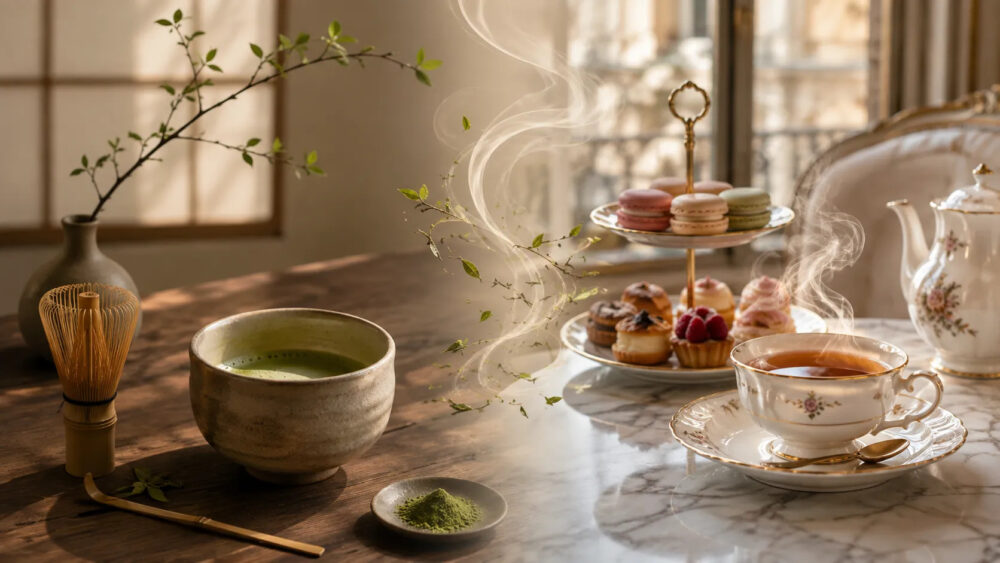
Tea is one of the few things in this world that almost every culture has made its own. The leaf travels, but the ritual around it never travels in one piece. It gets broken down and rebuilt, again and again, to match the values of the people holding the cup.
Nowhere is this more interesting than when you place Japan and France side by side. Both nations are famous for their tea cultures. Both treat tea as more than a drink. And yet, if you sat a Japanese tea master and a French tea salon owner at the same table, you would quickly see that they are not really talking about the same thing at all.
This blog is for anyone who loves tea, no matter where you live or which cup you reach for in the morning. We are going to walk through how Japan and France each turned tea into something deeply their own, what that says about their cultures, and what tea lovers everywhere can take from both.
Two Countries, Two Very Different Starting Points
Before we compare the two, it helps to understand where each culture’s relationship with tea actually began.
Tea arrived in Japan from China over a thousand years ago, brought back by Buddhist monks who saw it as a way to stay alert during long hours of meditation. Over centuries, this practical drink slowly turned into something spiritual. By the time of the samurai era, tea was no longer just something you drank to stay awake. It had become a tool for teaching patience, humility, and awareness.
France’s tea story is much younger. Tea reached French shores in the 1600s, largely through trade routes and the aristocracy’s fascination with anything exotic. Coffee had already taken hold as the everyday drink of the French people, so tea entered as something special, almost luxurious. It never became the daily habit that it did in Japan. Instead, it became associated with elegance, refinement, and the art of the salon.
This one difference in how tea arrived, as a spiritual practice in Japan and as a luxury import in France, explains almost everything that follows.
The Japanese Way: Tea as a Quiet Discipline
If you have ever seen images of a traditional Japanese tea ceremony, called chanoyu or sado, you already know it looks nothing like an average tea break. There is a slow, careful rhythm to it. Every movement, from how the tea bowl is turned to how the whisk touches the matcha, is intentional.
It’s Not About the Tea Alone
Here is something that surprises many tea lovers when they first learn about Japanese tea culture: the ceremony is not really about drinking tea. It is about the entire experience leading up to that one sip.
The host spends hours preparing. The room is cleaned until it feels untouched. The flowers are arranged simply, often with just one or two stems, so nothing distracts from the moment. Guests are expected to leave their titles, their worries, and their rush at the door. Inside that small tea room, everyone is equal.
This idea has a name in Japanese philosophy: ichigo ichie, which roughly means “one time, one meeting.” It reminds everyone in the room that this exact gathering, with these exact people, at this exact moment, will never happen again. So it deserves full attention.
The Role of Silence
One thing that stands out to first-time visitors is how quiet the whole process is. There is no small talk while the matcha is being whisked. No phones. No background noise. Silence is treated as part of the ceremony, not an awkward gap to fill.
For a culture that values restraint and mindfulness, this silence is the whole point. It gives space for people to actually notice things, the sound of water being poured, the smell of the tea, the weight of the bowl in their hands.
Simplicity as a Form of Respect
Japanese tea culture leans heavily on the idea of wabi-sabi, which is the appreciation of simple, imperfect, and natural beauty. A tea bowl with a slightly uneven shape is not seen as a flaw. It is seen as honest. It shows the hand that made it.
This is very different from how many Western tea traditions treat their tools. In Japan, the humble clay bowl, the plain wooden scoop, and the simple room are not signs of poverty. They are signs of taste. Nothing extra is needed because the moment itself is already complete.
The French Way: Tea as an Art of Living
Now picture a completely different scene. A Parisian salon de thé, soft lighting, a marble-topped table, porcelain cups with gold trim, and a small tiered stand holding delicate pastries. This is the French tea experience, and it could not feel further from a Japanese tea room.
Tea as a Social Performance
In France, tea culture grew up alongside the country’s love for beautiful presentation and conversation. Where Japan treats silence as sacred, France treats conversation as the heart of the gathering. Tea time in French culture is a social event, a reason to gather friends, catch up, and be seen enjoying something lovely.
The famous French tea houses, places like Mariage Frères, built entire identities around offering hundreds of tea blends, often mixing in fruits, flowers, and spices that would rarely appear in traditional Japanese or Chinese tea. This willingness to blend and experiment reflects something very French: the belief that tradition should serve creativity, not limit it.
The Importance of Presentation
If Japanese tea culture is about restraint, French tea culture is about beauty on display. The cups matter. The saucers matter. The little sugar tongs matter. Everything on the table is chosen to look as good as it tastes.
This connects to a wider French value that shows up in their food, their fashion, and their art: the idea that how something looks is part of how good it actually is. A cup of tea served in a chipped mug, even if the tea itself is excellent, would feel wrong in a French tea salon. Presentation is not vanity here. It is respect for the guest and for the moment.
Pairing Tea with Food
Unlike Japan, where tea is often enjoyed on its own or with one small traditional sweet, French tea culture almost always involves food. Macarons, madeleines, éclairs, and delicate sandwiches are common companions to a pot of tea.
This pairing tradition borrows heavily from France’s deep relationship with food and wine. Just as a French person might think carefully about which wine goes with which dish, they apply the same thinking to tea. A smoky Lapsang Souchong might be paired with something rich and buttery, while a delicate white tea might be served with something light and fruity. Tea, in this sense, becomes part of a larger meal experience rather than a separate ritual on its own.
Comparing the Two Philosophies Side by Side
To really understand the difference, it helps to place both cultures next to each other on a few key points.
On the purpose of the gathering Japan uses the tea ceremony to create stillness and reflection. France uses tea time to create connection and conversation.
On simplicity versus decoration Japan values a plain bowl and a bare room, believing beauty comes from what is left out. France values fine porcelain and thoughtful decor, believing beauty comes from what is added in.
On the role of the host In Japan, the host trains for years, sometimes decades, to master the exact movements of the ceremony. In France, the host focuses more on hospitality, making sure guests are comfortable, well fed, and entertained.
On tea itself Japan mostly celebrates one type of tea, matcha, prepared in a very specific and unchanging way. France celebrates variety, blending teas from around the world into new and often unexpected combinations.
On silence versus sound Japan treats quiet as meaningful. France treats lively conversation as meaningful.
Neither approach is better than the other. They simply come from different ideas about what a shared cup of tea is supposed to do for the people around it.
What These Differences Reveal About Each Culture
Tea customs rarely exist in isolation. They mirror the wider values of the society that shaped them.
Japan’s emphasis on discipline, humility, and presence in the tea ceremony echoes through much of Japanese life, from how meals are prepared to how craftsmanship is respected in everything from woodworking to calligraphy. The tea ceremony is really a small, controlled space where these bigger cultural values get practiced and passed down.
France’s emphasis on beauty, pleasure, and social connection in tea culture echoes through French life as well, from their approach to cooking, to fashion, to simply sitting at a café and watching the world go by. Tea, in France, is one more way to practice the art of living well, a concept the French call l’art de vivre.
So when you drink tea the Japanese way or the French way, you are not just tasting a different type of tea. You are stepping, even briefly, into a different way of thinking about time, beauty, and connection.
What Tea Lovers Everywhere Can Learn from Both
You do not need to travel to Kyoto or Paris to bring a little bit of both philosophies into your own daily tea routine. Here is what each culture can teach anyone who simply loves a good cup of tea.
From Japan, learn the value of slowing down. You do not need a full tea ceremony to benefit from this idea. Simply put your phone away for the few minutes it takes to make and drink your tea. Notice the steam rising from the cup. Notice the warmth in your hands. This small pause can turn an ordinary moment into a calming one.
From France, learn the value of making it feel special. You do not need expensive porcelain to do this. Even using your favorite mug, adding a small snack, or lighting a candle while you drink your tea can turn a rushed break into something you actually look forward to.
From Japan, learn to appreciate imperfection. Not every tea session needs to be Instagram perfect. A slightly bitter brew, a mismatched cup, a quiet moment alone, these things have their own quiet beauty.
From France, learn to share the moment. Tea does not have to be a solo ritual. Inviting a friend over, even for a simple cup and a short conversation, can turn tea time into a small but meaningful social tradition of your own.
Bringing It Into Your Own Tea Ritual
If you want to try blending these two philosophies at home, here is a simple way to start.
Set aside fifteen minutes, not for multitasking, but purely for your tea. Choose one tea you genuinely enjoy, whether that is a delicate green tea, a fragrant black tea, or a fruity blend. Prepare it with a little care, warming your cup, watching the color change as it steeps.
Once it is ready, decide how you want the moment to feel. If you want stillness, sit quietly, breathe, and simply notice the tea without any distractions, borrowing from the Japanese approach. If you want connection, call a friend, add a small treat on the side, and let the conversation flow, borrowing from the French approach.
There is no wrong way to do this. The whole point, whether you are in a Kyoto tea room or a Paris salon, is that tea gives us a reason to pause and be present, even if only for a few minutes.
A Shared Love, Expressed in Different Languages
At the end of the day, both Japan and France arrived at the same basic idea from two very different directions. They both decided that tea deserved more than a rushed sip between tasks. They both built entire traditions around slowing down and giving the moment meaning.
The Japanese tea ceremony whispers. The French tea salon chats. But both are saying the same thing in their own way: this small cup deserves your attention.
For tea lovers around the world, this is perhaps the most beautiful part of the story. No matter which tradition speaks to you more, the quiet ritual of Japan or the elegant sociability of France, you are joining a global community of people who have always believed the same simple truth. Tea is never just tea. It is a small, everyday invitation to slow down, connect, and be present, one cup at a time.
Find your next cup.
Need help choosing your tea? Tell us what you enjoy, and our team will help you find your next cup.