
Premium Black Tea: How to Judge Quality Before You Buy
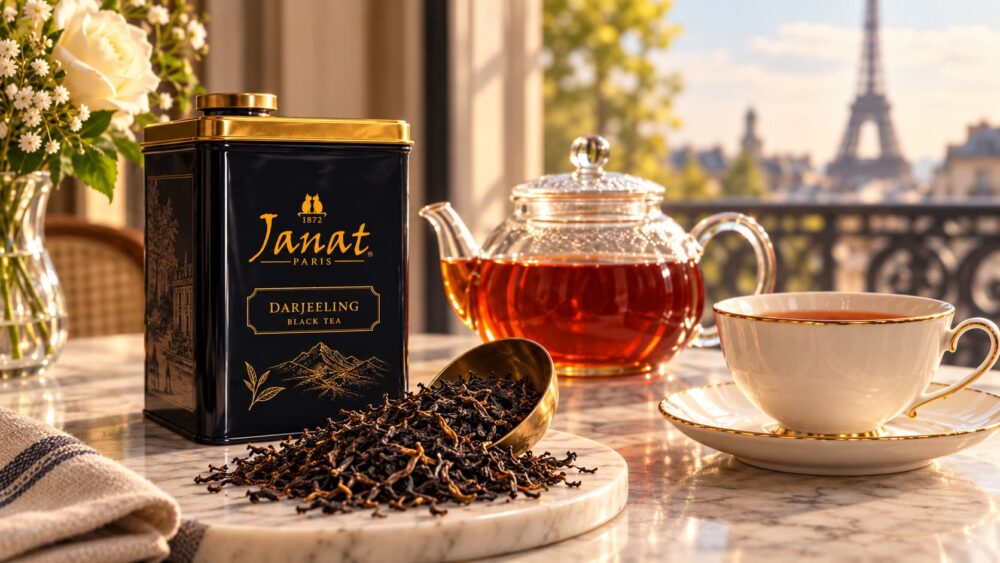
A higher price does not automatically make black tea premium.
Beautiful tins, words such as luxury, finest and exclusive, and an impressive origin story can make almost any tea sound exceptional. But if you already drink black tea regularly, the question is more practical: will you actually notice a difference in the cup?
The answer usually comes down to what is behind the label — where the leaves come from, when they were harvested, how clearly the producer explains their selection and processing, and whether the flavour delivers something more distinctive than an everyday blend.
Here is how to separate genuinely premium black tea from premium-looking packaging.
What “Premium” Actually Means in Black Tea
There is no single worldwide definition that makes a tea “premium.”
Instead, quality tends to reveal itself through a combination of provenance, leaf selection, harvest, processing and transparency.
For an experienced tea drinker, those details matter because they affect what you ultimately notice: aroma before the first sip, clarity of flavour, mouthfeel, finish and how well the tea responds when you adjust your brewing.
Origin should mean more than a country name
“Indian black tea” or “Sri Lankan black tea” tells you considerably less than a clearly identified tea-growing region.
Darjeeling, for example, is protected as a geographical indication. Tea Board India maintains a certification and traceability system intended to distinguish genuine Darjeeling tea from tea simply marketed using the name.
Sri Lankan tea also varies significantly according to elevation and growing region. The Sri Lanka Tea Board notes that even different fields or picking dates can produce noticeable differences to an experienced tea taster.
That is why provenance becomes valuable: it gives the flavour a reason to taste the way it does.
Leaf grade needs context
Terms such as OP, BOP and other traditional grading descriptions can be useful, but they should not be treated as a simple “higher grade = better tea” scale.
Black-tea grading frequently describes characteristics such as leaf size and appearance. What matters more is whether the leaf style is appropriate for the result you want.
A smaller broken leaf can produce a stronger, faster infusion ideal for breakfast or milk tea. A more intact leaf can offer a slower extraction and more nuanced aroma.
Premium therefore does not necessarily mean “largest leaf available.” It means deliberate selection for a particular drinking experience.
Harvest can change the character completely
This is particularly noticeable with Darjeeling.
Spring, summer and later-season harvests can have very different personalities. Tea drinkers seeking the celebrated muscatel character of Darjeeling often look specifically toward summer or second-flush teas.
JANAT’s Heritage Darjeeling, for example, is described as using leaves picked during the summer second flush to produce its characteristic fruity, muscatel profile.
Processing should preserve character, not hide it
Mass-market tea is primarily designed for consistency.
Premium tea has a different opportunity: allowing identifiable characteristics of the leaf, region or blend to remain noticeable.
That does not mean flavoured black tea cannot be premium. A well-made Earl Grey, for example, should allow the black-tea structure and bergamot character to complement each other rather than producing an overpowering perfume.
The important question becomes:
Can the brand explain why this tea tastes different?
If it cannot, “premium” may be describing the packaging more than the tea.
What to Look for Before You Buy Premium Black Tea
Before you buy premium black tea online, look beyond star ratings and packaging photographs.
These five checks reveal much more.
1. Look for a specific origin
Better:
Darjeeling, India
Dimbula, Sri Lanka
Less useful:
Premium imported black tea
The more traceable the origin, the easier it becomes to understand what you are paying for.
For protected origins such as Darjeeling, certification and geographical authenticity deserve particular attention.
2. Check what the brand says about the leaf
If you are buying premium loose leaf black tea, look at the actual leaves wherever product photography allows.
You are looking for intentional selection rather than simply assuming every whole-looking leaf is superior.
Ask:
- Is the tea whole leaf or broken leaf?
- Is the harvest or flush identified?
- Is the growing region disclosed?
- Does the producer explain why that particular leaf was selected?
The answer should match the intended cup.
3. Look at harvest information when it matters
For teas where season influences flavour — particularly Darjeeling — harvest information can be more useful than decorative descriptions such as “exclusive” or “reserve.”
A brand explaining when its tea was picked gives you something concrete to evaluate.
4. Examine flavouring transparency
For flavoured premium black tea, ingredients matter just as much as the base tea.
JANAT’s Original Earl Grey, for example, is made with selected bergamot oil and follows a JANAT recipe dating to 1923.
That is considerably more informative than a package simply saying “Earl Grey flavour.”
5. Check certification and sourcing claims carefully
Organic certification, geographical indication, origin certification and agricultural practices can all add useful information — but they mean different things.
Do not assume one certification proves every aspect of quality.
A better buying decision considers origin + leaf + harvest + processing + taste preference together.
A useful test before choosing
Instead of asking:
“Which is the best premium black tea brand?”
Ask:
“What quality difference am I expecting to taste?”
A delicate Darjeeling drinker and someone who wants a powerful morning tea with milk should not necessarily buy the same tea.
JANAT’s Premium Black Tea: Where It Comes From & Why It’s Different
JANAT Paris approaches premium tea from the perspective of a French tea house rather than simply a packaged-tea label.
The house dates to 1872, when founder Janat Dores travelled internationally as a merchant of tea, coffee and cocoa. JANAT’s history also connects Dores with Gustave Eiffel; the brand attributes its later French Oak tea concept to that relationship and to experimentation with ageing and flavour.
For someone comparing JANAT black tea with an ordinary supermarket blend, however, heritage alone should not be the reason to choose it.
The stronger argument is that JANAT’s Black Series gives different types of black-tea drinkers clearly different propositions rather than presenting one anonymous “premium blend.”
Premium Darjeeling
JANAT describes its Premium Darjeeling as being produced from strictly selected Darjeeling leaves.
This is the option to consider when your definition of premium means aroma, delicacy and regional character, rather than maximum strength.
Original Earl Grey
JANAT’s Original Earl Grey combines black tea with selected bergamot oil and follows a recipe the house says has been used since 1923.
For buyers who already enjoy Earl Grey, this is an important distinction.
You are not paying simply for “black tea with citrus flavour.” You are choosing a defined house style with a longstanding formulation.
Ceylon Extra
JANAT’s Ceylon Extra is made with high-grown Ceylon tea leaves and is specifically positioned for drinkers who enjoy black tea with milk.
That makes it a very different buying decision from Premium Darjeeling.
One is primarily about delicacy and aromatic character; the other is designed to maintain enough structure to remain expressive after milk is added.
JANAT Heritage selections
The Heritage collection adds further provenance detail.
JANAT states that its Heritage Earl Grey uses tea from Dimbula in Sri Lanka at approximately 1,200–1,400 metres, while its Heritage Darjeeling uses summer second-flush leaves. The brand also states that its Ceylon tea received Gold Medals in consecutive years at the Tea Expo in Paris
This is where the proposition becomes more convincing for a tea-aware buyer: different origins and styles are being chosen for different drinking experiences.
JANAT also says its present-day operation links tea cultivation in Sri Lanka with global distribution and works with more than 9,000 women involved in tea harvesting and production.
For buyers in France, Japan and the UAE, JANAT currently lists locations or presence in Paris, Tokyo’s Omotesando district and Dubai.
Which JANAT Premium Black Tea Should You Choose?
The easiest way to choose is not by trying to determine which tea is objectively “best.”
Choose according to how you actually drink tea.
| Your Preference | JANAT Tea Direction | Why |
|---|---|---|
| Delicate, aromatic tea without milk | Premium Darjeeling | Focuses on selected Darjeeling leaves and nuanced character |
| Classic citrus aroma | Original Earl Grey | Black tea with selected bergamot oil and JANAT’s established house recipe |
| Stronger tea with milk | Ceylon Extra | High-grown Ceylon leaves selected for a fuller cup |
| Fruity black tea | Peach & Pear | Black-tea experience with peach and pear notes |
| Warm spices | Everest Chai | Nepal tea combined with spices |
This approach also matters when buying a premium black tea gift.
Do not simply choose the most expensive tin.
A premium gift feels much more considered when the flavour matches the recipient.
An Earl Grey drinker will probably appreciate an elevated Earl Grey more than an unfamiliar rare tea they never wanted in the first place.
How to Brew Premium Black Tea Properly
Premium leaves cannot compensate for careless brewing.
JANAT’s own black-tea guidance recommends water around 95–100°C and approximately 3–5 minutes of steeping for black tea.
For a new loose-leaf tea, use that as a starting range rather than an absolute rule.
A simple method:
- Use fresh water rather than water that has repeatedly boiled.
- Start with roughly 2–3 grams of tea per 200–250 ml of water.
- Infuse for about three minutes first.
- Taste before automatically adding another two minutes.
- Adjust one variable at a time on your next cup.
If the tea becomes too bitter, shorten the infusion before reducing the amount of tea.
If it feels thin, add slightly more leaf before dramatically extending brewing time.
For delicate Darjeeling, you may prefer slightly cooler water or a shorter infusion. For a stronger Ceylon intended for milk, a longer infusion may suit your preference.
The goal is not to follow a ritual perfectly.
It is to find the point where the qualities you paid for become easiest to taste.
And once opened, keep premium tea protected from heat, moisture, light and strong surrounding aromas.
Premium Black Tea vs Mass-Market Black Tea
The difference is not simply “expensive tea versus cheap tea.”
They are often designed to solve different problems.
| Factor | Premium Black Tea | Mass-Market Black Tea |
|---|---|---|
| Leaf selection | Often selected for a particular origin, harvest or flavour profile | Frequently optimized for speed, consistency and large-scale blending |
| Sourcing | Greater emphasis on estate, region or identifiable provenance | Origin may be broad or blended across regions |
| Flavour | Greater opportunity for distinctive regional, seasonal or aromatic character | Designed for a familiar and consistent cup |
| Caffeine | Varies by tea, dose and brewing; premium does not automatically mean more caffeine | Also varies; tea format alone does not reliably predict caffeine |
| Consistency | Some variation can be part of the experience | High consistency is usually a priority |
| Price per cup | Higher, with value centred on provenance, aroma and drinking experience | Lower, with value centred on convenience and everyday affordability |
| Best for | Drinkers who notice origin, aroma, finish and brewing differences | Drinkers primarily seeking speed and familiarity |
Neither category is automatically “right.”
The question is whether you care about the differences premium tea is asking you to pay for.
If your black tea is simply something you drink quickly while leaving home, supermarket tea may already fulfil the job perfectly.
But if you notice whether a Darjeeling has muscatel character, whether bergamot overwhelms an Earl Grey, whether a Ceylon remains expressive with milk, or whether the aroma changes as the cup cools, moving upward in quality becomes much easier to justify.
That is when premium tea stops being a packaging decision.
It becomes a taste decision.
Before You Choose Your Next Black Tea
There is a useful experiment for anyone wondering whether premium black tea is worth the higher price.
The next time you make your usual tea, drink the first few sips without milk, sugar or anything else.
Notice three things:
What can you smell before drinking it?
Can you describe something specific in the flavour beyond “strong” or “tea”?
Does anything remain after you swallow?
If those questions suddenly make you curious about what your current tea is missing, you probably do not need someone to convince you to “upgrade.”
You need to discover which kind of premium tea actually matches your palate.
JANAT’s tasting-style tea finder is designed around exactly that question rather than asking you to start with a product.
FAQ: Buying Premium Black Tea
Is premium loose leaf black tea worth it over tea bags?
It can be, particularly if you value aroma, provenance and control over brewing. Loose leaf lets you adjust the amount of tea and observe the leaves themselves. However, a well-made premium tea bag can still produce an excellent cup. JANAT offers several Black Series teas in both tins and tea-bag formats, so the better choice depends on whether your priority is ritual and control or convenience.
How long does premium black tea stay fresh?
There is no single freshness period that applies to every black tea. Once opened, aroma gradually declines through exposure to air, heat, moisture and light. Keep tea tightly sealed in a cool, dry location away from strongly scented foods. JANAT’s storage guidance particularly emphasizes protecting tea from environmental exposure that can reduce aroma and flavour.
Is premium black tea good for gifting?
Yes, particularly when the tea has a clear origin, distinctive flavour profile or story the recipient can appreciate. Instead of choosing purely by price, match the tea to how the recipient drinks it. Earl Grey suits citrus lovers, Darjeeling suits drinkers who enjoy more delicate tea, while a stronger Ceylon can be more appropriate for someone who regularly takes milk.
Where does JANAT premium black tea come from?
It depends on the tea. JANAT’s Black and Heritage ranges include Darjeeling tea from India, Ceylon teas from Sri Lanka and Everest Chai using Nepal tea. JANAT’s Heritage Earl Grey is described as using tea grown in Sri Lanka’s Dimbula highlands.
Which JANAT black tea is best to try first?
Choose according to your established preference rather than starting with the most expensive product. Try Premium Darjeeling if you prefer nuanced tea without milk, Original Earl Grey if citrus is your usual choice, or Ceylon Extra if you prefer a fuller black tea that works well with milk.
Find your next cup.
Need help choosing your tea? Tell us what you enjoy, and our team will help you find your next cup.